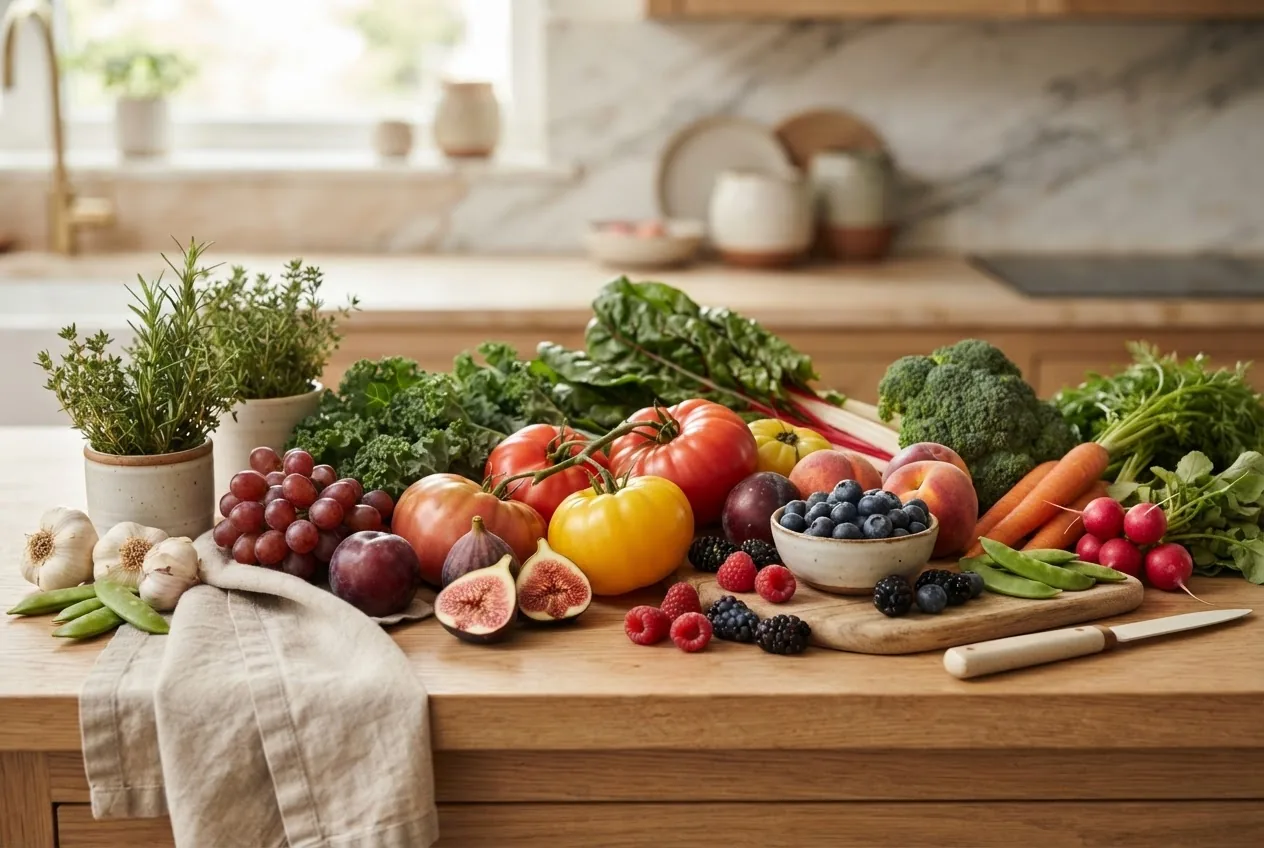
Answer: Right now in Texas the freshest fruits include spring berries (April–May), early peaches (May–June), summer melons and tomatoes (June–August), and fall pears and late-season grapes (September–October); winter offers citrus varieties and cold-hardy greens in limited supply. Use month-by-month lists below for precise harvest timing.
Understanding Seasonal Produce and Its Benefits?
Answer: Eating seasonal produce means choosing fruits and vegetables harvested at their peak in the current growing period, which usually delivers better flavor, higher nutrient retention, and lower cost compared with out-of-season imports.
Term: seasonal produce — produce harvested during its natural growing season in a given region, typically offering the best freshness and flavor.
Seasonal produce is tied to local climate patterns and harvest windows; in Texas these windows vary by ecoregion (coastal, Gulf Plains, Hill Country, North Texas). According to a 2024 USDA seasonal harvest chart, local timing shifts year-to-year with weather, but general monthly trends hold useful planning value for shoppers and home cooks.
- Better flavor: Fruits ripened on the plant concentrate sugars and volatile aromas, making them taste fuller.
- Higher nutrient retention: Shorter time from harvest to table preserves vitamins—according to a 2022 peer-reviewed nutrition review, shorter supply chains retain more vitamin C and polyphenols.
- Lower environmental cost: Fewer long-haul shipments reduce food miles and refrigeration needs.
- Cost savings: Peak-season surpluses lower retail prices at farmers markets and grocers.
- Supports local farms: Buying in season strengthens regional agriculture and biodiversity.
For a deeper look at individual varieties and their nutrient profiles, see Fruit Types Guide with Benefits and Nutritional Information.
Transition: With benefits clear, the next section lists what fruit is in season now in Texas by month and season so you can shop confidently.
What Fruit Is in Season Now? Monthly and Seasonal Guide for Texas?
Answer: Use the month-by-month breakdown below to find fruits and supporting vegetables at their peak in Texas; entries note typical harvest windows, where to look, and quick usage tips for markets and home storage.
This guide groups produce by season and month using regional Texas timing—consult the Texas A&M AgriLife Extension for county-level adjustments where needed (Texas A&M AgriLife Extension Service).
Spring Fruits and Vegetables in Season
Answer: Spring in Texas (March–May) brings early berries, tender greens, asparagus in some areas, and fast-growing stone fruit starts—look to farmers markets for freshest picks.
- Strawberries (March–May): Peak in April; pick ripe red berries; ideal for eating raw or chilling. Calories in 10 Strawberries and Serving Size Nutritional Guide
- Blueberries (late April–May): Early plantings ripen in late spring in South/Central Texas; choose firm berries with bloom intact.
- Cherries (late April–May in limited Texas pockets): Short window and often limited to Hill Country orchards; best when dark, glossy, and firm—see local orchard calendars.
- Apricots (April–May): Early stone fruit; choose slightly soft fruit for sweetness and aroma.
- Early peaches (late May in warmer zones): Short-season start—watch local farm stands. spring vegetables guide
- Asparagus (March–April): Cold-sensitive crowns produce early spears; look for tight tips and bright color.
- Leafy greens (March–May): Spinach, lettuce, arugula and Swiss chard flourish in spring; harvest young for tenderness.
- Green onions, peas, radishes (spring months): Fast-turn crops ideal at markets and kid-friendly to snack on.
Notes: Spring timing varies—cool springs push harvests later; warm early springs advance them. According to a 2024 Texas A&M planting calendar summary, microclimates can shift peak dates by 2–3 weeks.
Summer Fruits and Vegetables in Season
Answer: Summer (June–August) is Texas’ richest harvest for fruits—peaches, watermelons, cantaloupes, tomatoes—and summer vegetables like corn, eggplant, zucchini and green beans are abundant.
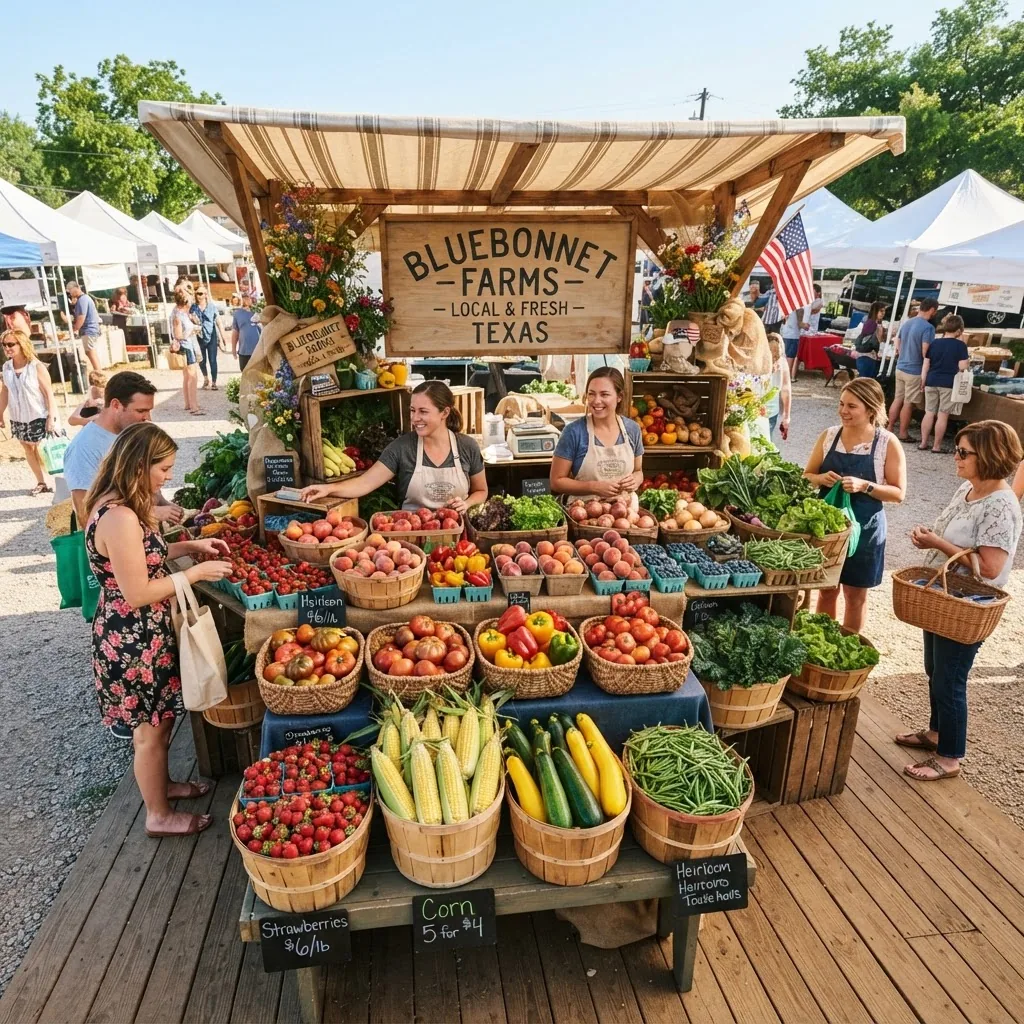
- Peaches (June–July): Peak in June for southern Texas and July elsewhere; smell the aroma at the stem end and press gently for slight give.
- Watermelon (June–August): Prime midsummer; pick by hollow thump or field-stem yellow spot; according to a 2023 industry harvest report, Texas contributes significant summer melon volume to domestic supply.
- Cantaloupe & Honeydew (June–August): Sweetness peaks after warm nights; check aroma at the blossom end.
- Tomatoes (June–September): Warm-season varieties explode mid-summer; choose heavy, fragrant fruits. Calories in Carrots and Fiber Content Nutritional Guide
- Corn (late May–July): Corn season is typically early summer; pick sweet corn with bright green husks and moist silks—see harvesting timing below for selection and storage tips.
- Eggplant (July–September): Glossy skin and firm flesh signal freshness—eggplant season is strong across Texas in summer. are vegetables bad for you?
- Zucchini and summer squash (June–September): Prolific harvests; smaller fruits are more tender and less seedy—zucchini season peaks in mid-summer.
- Green beans (June–September): Pick young, snap-crisp pods; frequent harvesting extends production. vegetables name guide
Quick selection tips: For corn, buy within 24–48 hours of harvest when possible; for watermelons, local vendors often sell by field-run days—ask the grower for harvest date. According to a 2024 USDA market bulletin, summer varieties show best flavor when sold within a week of harvest.
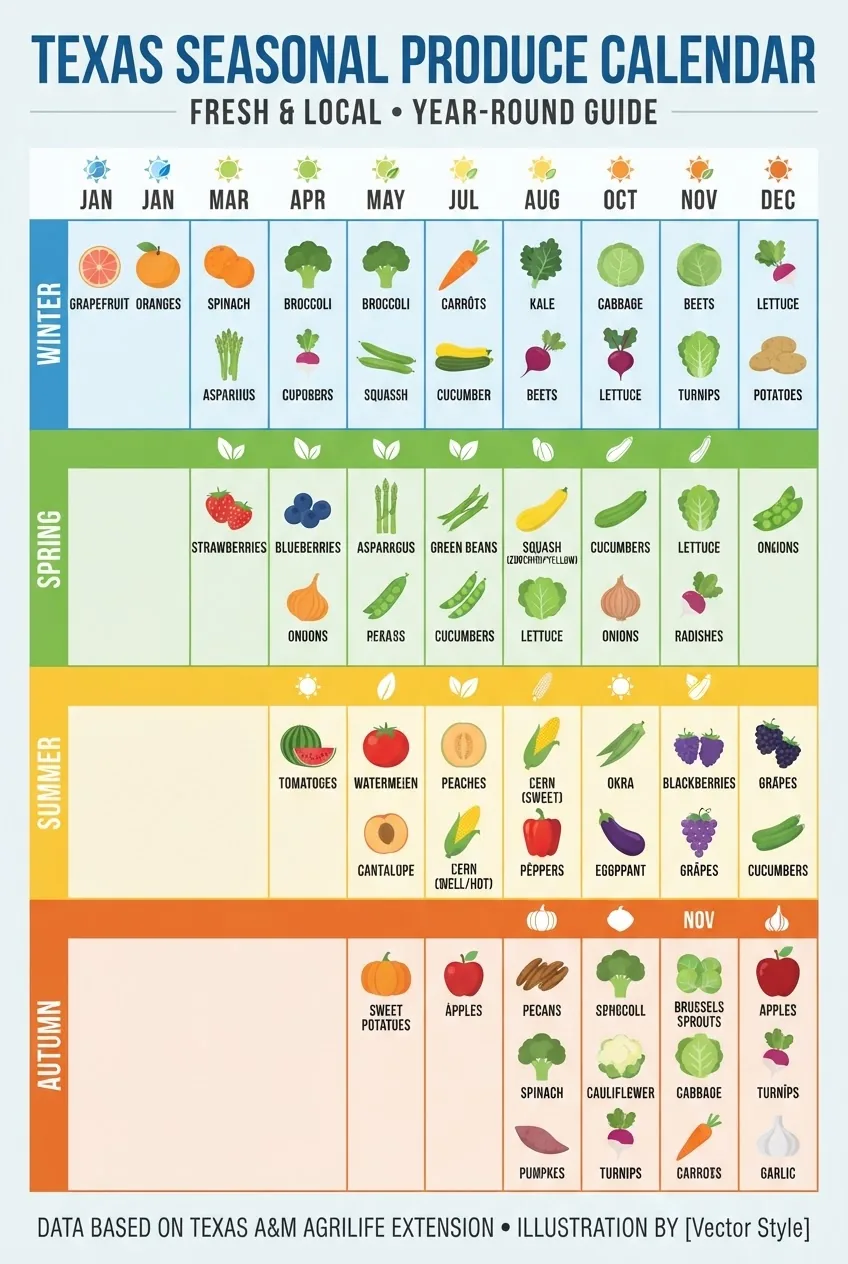
Fall Fruits and Vegetables in Season
Answer: Fall (September–November) delivers pears, late grapes, figs, apples in some areas, and a second wave of vegetables like winter squash, sweet potatoes, and brassicas.
- Pears (September–October): Many Texas orchards harvest pears in early fall; allow some varieties to ripen off the tree for best texture.
- Grapes (late August–October): Table grapes and wine grapes appear in late summer to fall—ask growers about variety and peak window; fall fruits seasonal guide
- Figs (August–October): Multiple crops per year in favorable climates—look for soft fruit with a sweet perfume.
- Apples (September–October in Hill Country & cooler microclimates): Short windows in Texas; expect firm, tart varieties more than commercial sweet types.
- Winter squash and pumpkins (September–November): Peak harvest in fall—pick firm skins and dry stems for storage potential.
- Sweet potatoes (September–November): Harvested in fall; cure before long-term storage to improve sweetness and shelf life.
- Brassicas (broccoli, kale, cabbage) (October–December): Fall sets up cold-hardy vegetables—see selection notes and a nutrition reference for cabbage below. calorie content of cabbage
Fall harvests are often more tolerant of cooler nights, which can intensify sugars in certain fruits (pears, apples) and improve flavor in brassicas. According to a 2022 agricultural soil temperature study, cool nights trigger sugar concentration in many fruit crops.
Winter Fruits and Vegetables in Season (focus on Texas winter)
Answer: Texas winters (December–February) offer citrus in lower-elevation zones, cold-hardy greens, root vegetables and stored crops; fresh fruit options are limited but high-value (citrus, persimmons).
- Citrus (navel oranges, grapefruit, tangerines) (November–February): Best in coastal and southern Texas; citrus is a winter highlight—see selection tips and storage below.
- Pomegranates (October–December): Late fall into early winter in favorable Texas pockets; choose heavy fruits with glossy skins.
- Persimmons (October–December): Two types—Fuyu (eat firm) and Hachiya (must be soft to eat); local trees often fruit in late fall.
- Broccoli and cauliflower (December–March): Classic cold-season brassicas; harvest tight heads with firm curds— when is broccoli in season
- Root vegetables (carrots, beets, turnips) (December–March): Cooler soils improve sweetness; late-planted roots store well.
- Cabbage (November–March): Cold-hardy and storeable; firm heads indicate good storage potential. calorie content of cabbage
Caveat: Winter fruit availability in Texas is highly regional; the Rio Grande Valley has a different winter profile than North Texas. For county-specific harvest timing consult Texas A&M AgriLife Extension or local cooperative extensions.
Transition: The monthly lists above include many items users commonly ask about—below we address specific FAQs about timing and classification of several items.
Frequently Asked Questions about Seasonal Fruits and Vegetables?
Answer: Quick answers to common seasonality questions are below; each is concise and optimized for rapid lookup.
Below the FAQ section you’ll find an expanded how-to on shopping and storing seasonal produce for maximum freshness and shelf life.
How to Shop and Store Seasonal Produce for Maximum Freshness?
Answer: Shop local markets early, buy produce as close to harvest date as possible, and use targeted storage methods—cooling, humidity control, and minimal handling—to extend freshness.
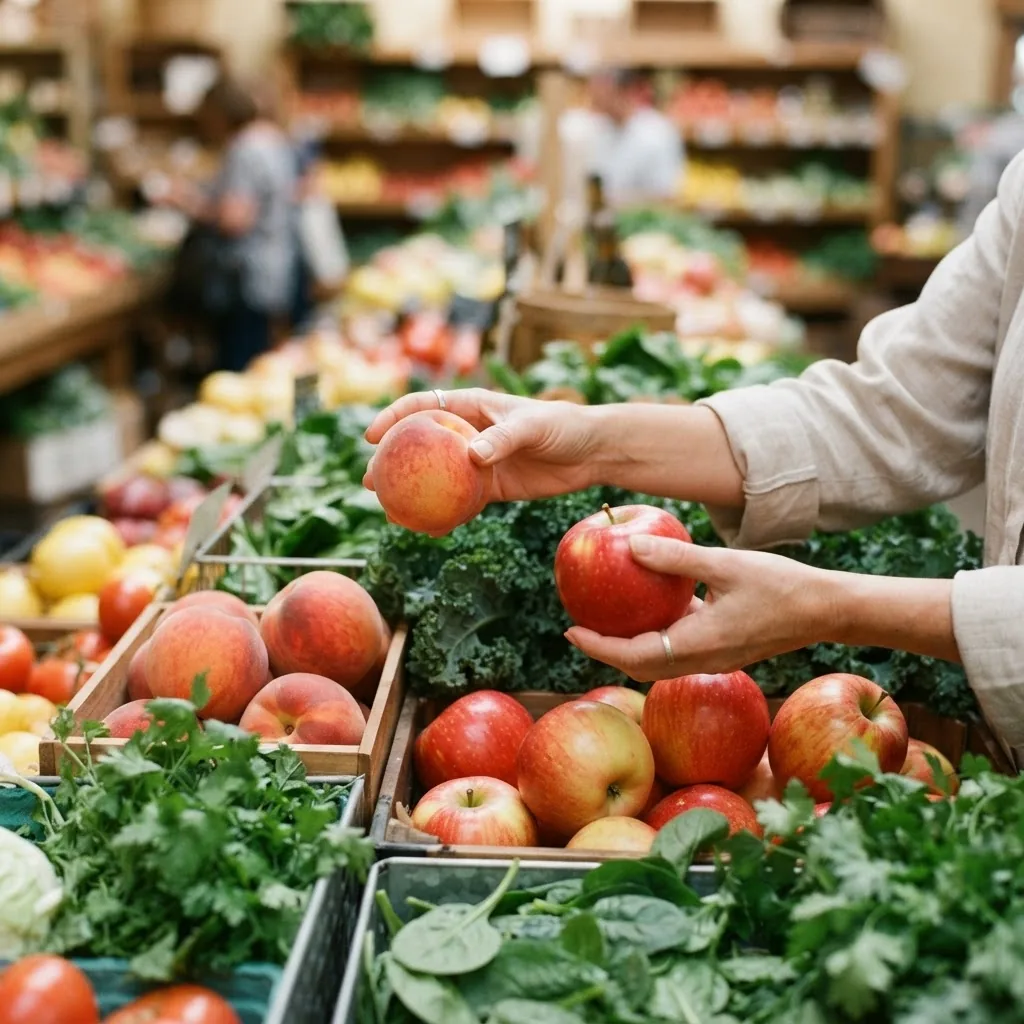
Practical, step-by-step tips for selection and storage (includes walk-throughs for corn, papaya, and zucchini):
- Shop smart: Visit farmers markets on Saturday mornings or sign up for CSA shares to get produce within 24–72 hours of harvest. Ask vendors for harvest date when possible.
- Inspect visually and by touch: Look for color, firm texture without soft spots, and intact stems; smell fruit scent at stem/blossom ends for ripeness signals.
- Separate ethylene-sensitive items: Store ethylene producers (apples, peaches, pears) away from sensitive greens and cucurbits to avoid overripening.
- Use targeted temperature & humidity: Cool-hardy brassicas prefer 32–40°F with high humidity; tomatoes and stone fruit prefer room temp until ripe.
Selection and storage walk-throughs:
- Corn (selection): Husks should be green and tight; silks moist. Storage: Shuck or keep husks on and chill immediately; eat within 48–72 hours for best sweetness.
- Papaya (selection): Choose slightly soft papaya with yellow-orange skin for eating within 1–2 days; fully green papaya can ripen at room temperature. Storage: Refrigerate ripe papaya to slow further softening for up to 3–4 days.
- Zucchini (selection): Pick small to medium-sized fruits with glossy skin and no soft spots. Storage: Refrigerate in a perforated bag in the crisper for 4–7 days; avoid washing until use.
Additional practical storage table comparing typical shelf life and ideal conditions:
| Produce | Best storage temp | Typical fridge life |
|---|---|---|
| Sweet corn | 32–40°F, high humidity | 1–3 days |
| Papaya (ripe) | 40–45°F | 3–4 days |
| Zucchini | 38–45°F, medium humidity | 4–7 days |
For more selection tips including visual cues and vendor questions, see fresh fruits and veggies guide.
Transition: After you shop and store correctly, incorporating seasonal produce into daily meals is straightforward and helpful for health goals.
Incorporating Seasonal Fruits and Vegetables into Your Diet?
Answer: Build meals around the season’s best—breakfast berries in spring, peach or melon snacks in summer, roasted squash in fall, and citrus-forward breakfasts in winter—emphasizing variety and whole-food preparation.
Examples of simple seasonal uses without full recipes:
- Spring: Fresh berry and yogurt bowls, mixed green salads with early peaches or apricots, and blanched asparagus with lemon.
- Summer: Grilled corn and tomato salad, chilled watermelon and feta plates, quick sautéed zucchini as a side, and fresh stone fruit for snacks. avocado fruit guide
- Fall: Roasted pears with greens, grape-forward salads, and mashed sweet potatoes as a hearty side.
- Winter: Citrus salads, warm braises with root vegetables, and hearty kale or broccoli sautés—see vegetable nutrition notes where useful. best fruits for weight loss
Health context: Seasonal variety helps meet micronutrient diversity goals; for questions about whether vegetables fit your diet, see the address of common myths in are vegetables bad for you? and for targeted weight-loss fruit choices see best fruits for weight loss.
Summary and Key Takeaways on What Fruit Is in Season Now?
Answer: The fastest route to the best fruit now in Texas is to follow the seasonal calendar above: spring berries and greens, summer stone fruit and melons, fall pears and grapes, and winter citrus and brassicas; shop local and store appropriately.
Quick-reference checklist (use at markets):
- Ask vendors for harvest date or pickup day.
- Buy abundant summer produce (corn, zucchini, tomatoes) for cost savings.
- Reserve citrus and root crops for winter meals.
- Use cooling and humidity strategies to extend life of corn, papaya, zucchini.
Final note: According to a 2024 USDA seasonal harvest overview and Texas A&M Extension reports, local climate variability can shift peak windows—treat the calendar as a practical guide, not a guarantee. Ready to shop local? Start at your nearest farmers market or vendor CSA today.
Call to action: Check your local market this week and pick one in-season fruit to enjoy fresh—your tastebuds and local farmers will thank you.