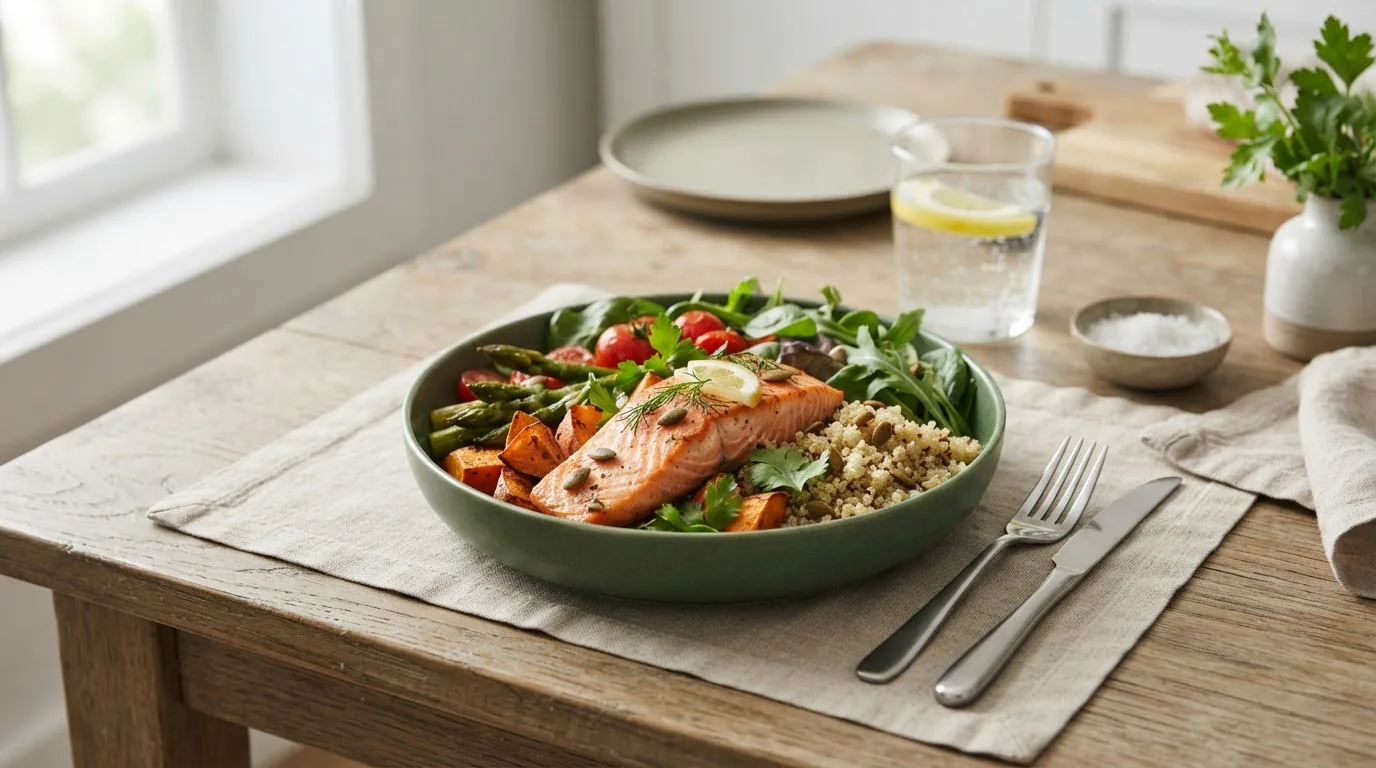

tips to eat less start with small, practical steps you can keep. If you’ve wondered how to control my food intake, this guide gives psychologically informed, sustainable tactics to manage portions and build lasting healthy routines.
Understanding Why We Overeat
Overeating comes from a mix of physiological signals, learned behaviors and environmental triggers. Appetite is driven not just by stomach emptiness but by hormonal and neural signals—ghrelin increases hunger, while peptide YY and leptin influence satiety signals. These biological cues interact with emotional eating, social context and food availability to create overeating patterns.
Physiologically, hunger cues are reliable short-term signals but can be altered by sleep, stress and hydration. For example, dehydration blunts satiety signals and can be mistaken for hunger; drinking water before a meal often reduces intake. Behaviorally, the food environment—large portions, constant availability of calorie-dense snacks, and plate size—acts as an external cue that encourages automatic eating.
Emotional eating and eating triggers link mood states to food as coping. Stress, boredom and strong emotions can bypass hunger/satiety cues and activate habitual eating routines. Recognizing emotional eating as separate from physiological hunger helps reframe the response: when the drive to eat originates from emotion, strategies other than food (walk, call a friend, breathing) are usually more effective.
Portion perception matters. Many people underestimate portions when food is served family-style or in opaque containers. Visual cues—platefuls, bowl sizes, package design—shape expected portions and can shift the internal sense of “enough.”
Research and public health guidance also highlight systemic contributors. According to a 2024 USDA/NIH synthesis of dietary trends (government health report), average portion sizes and processed food availability correlate strongly with increased caloric intake—key drivers in rising obesity rates. For detailed stats on consumption patterns and common dietary pitfalls, see the healthy dietary factors.
Comparing nutrient quality clarifies why some foods promote overeating: nutrient-poor, calorie-dense items often lack protein, fiber and healthy fats that support satiety. For a primer on how nutrient profiles affect intake, check the nutritional differences in eating.
Finally, appetite regulation spans a spectrum—some people need strategies to boost appetite, others to restrain it. For context on safe appetite adjustments and how they contrast with intake-control tactics, refer to the healthy appetite regulation.
Understanding the interplay of these factors—hunger cues, satiety signals, emotional triggers and the food environment—sets the stage for practical steps to eat less without feeling deprived.
Transition: With the causes clear, next are specific, actionable tips you can apply daily to reduce intake and control portions.
Practical Tips to Eat Less Daily
- Use smaller plates and bowls. A 9-inch plate looks fuller with the same portion than a 12-inch plate; visually full plates signal satisfaction. Combine this with higher proportion of vegetables to make plates appear generous.
- Practice mindful eating. Slow down, chew thoroughly, and put utensils down between bites. This gives satiety signals time to register. For a deeper set of techniques, see the mindful eating techniques.
- Prioritize protein and fiber at meals. Protein and fiber both increase fullness and reduce subsequent intake; pair lean protein with whole grains, legumes, or vegetables. Pair portion tactics with satisfying choices from the foods that increase fullness.
- Pre-portion snacks and meals. Instead of eating from a bag, divide into single-serve containers or use resealable bags. Pre-portioning replaces guesswork with consistent portions.
- Fill half the plate with vegetables. Volume without excessive calories helps you eat less naturally and improves nutrient density.
- Drink water before meals. A 12–16 ounce glass 15–30 minutes before eating can reduce meal intake by creating mild gastric distension and clarifying thirst vs. hunger.
- Limit distractions. Eating while watching screens or working often doubles intake because attention is diverted from internal fullness. Create a distraction-free mealtime habit for immediate intake reduction.
- Use measuring tools initially. Measuring cups or a kitchen scale teach portion sizes; after a few weeks you’ll estimate accurately. For practical portion tools, explore the 21 Day Fix portion guides.
- Serve from the kitchen, not the table. When people dish up from communal plates, they often take larger servings. Serve directly plated portions to limit automatic refills.
- Plan meals and snacks. Weekly planning reduces impulsive choices and reliance on large fast-food portions. For practical planning steps, see the nutritious meal planning.
- Focus on nutrient density over calorie-counting. Foods rich in vitamins, minerals, protein and fiber keep you satisfied longer per calorie — learn more about healthy food consumption.
- Replace liquid calories with water or unsweetened beverages. Beverages can add significant unrecognized calories that undermine portion control.
- Use visual portion guides or images. Keep a cheat sheet of common portion sizes (e.g., 3 oz protein = deck of cards) or the visual cues using food images to train your eye.
- Adopt clean eating basics to reduce processed-food overeating. Whole, minimally processed foods make volume-based satisfaction easier—see the clean eating basics.
- Practice simple swaps: choose air-popped popcorn over chips, fruit over pastries, or a side salad instead of fries. Small swaps compound into meaningful intake reductions without high effort.
- Time meals to avoid extreme hunger. Eating balanced snacks can prevent overeating at the next meal—timing strategies covered later in the guide.
- Track intake for short bursts. Use a food journal or an app for two weeks to identify habitual overconsumption patterns; self-monitoring is highly predictive of success.
- Be flexible and forgiving. If you overeat at one meal, reset at the next—rigid restriction often leads to rebound overeating.
- Use creative plate composition: smaller portions of calorie-dense foods surrounded by volumizing, low-calorie items like vegetables or broth-based soups.
Tip trade-offs: accuracy (measuring cups) vs. practicality (smaller plates). Measuring is most accurate initially; visual cues and plate swaps are more sustainable long-term. For combining portion control with satisfying food choices, consider resources on foods that increase fullness and adopt the unprocessed food benefits.
Transition: The daily tips above work best when embedded into consistent habits—next, how to change routines to make eating less automatic and long-lasting.
How to Control My Food Intake Through Habit Change
Changing intake is less about willpower and more about redesigning cues and routines. The cue-routine-reward model from behavioral science helps: identify the cue (time, emotion, environment), replace the routine (eating) with a healthier one, and maintain the reward (satisfaction, stress relief).
- Start with a clear goal and micro-habits. Replace vague goals (“eat less”) with specific, measurable behaviors: “Use a 9-inch plate at dinner” or “drink 16 oz water before meals.” Small wins build momentum.
- Map your cues. Keep a one-week log: when you eat, where you are, your mood, and hunger level. This food journaling practice trains awareness and flags environmental triggers. A simple walkthrough: note time, hunger 1–10, trigger (boredom/stress/social), and portion. Over a week patterns reveal opportunities for targeted change.
- Set implementation intentions. Decide in advance: “If I feel stressed at 3 p.m., then I’ll take a 5-minute walk instead of snacking.” This pre-commitment links cues to alternative routines.
- Create friction for undesired behaviors. Keep snacks in harder-to-reach places, remove junk-food visibility, or pre-portion treats so indulgence requires conscious effort.
- Design rewarding substitutes. If eating relieves boredom, plan satisfying non-food activities—calling a friend, a hobby, or a brief physical activity that produces endorphins and replaces the reward.
- Use habit stacking. Attach a new small habit to an existing one: after making coffee, prepare a water bottle to sip during the morning and avoid mid-morning overeating.
- Leverage environmental design. Keep fruit on the counter, pre-chop vegetables for quick access, and store calorie-dense items in opaque containers or less convenient locations.
- Build consistent meal times. Regularity stabilizes hunger cycles and reduces impulsive snacking. Students and busy adults benefit from predictable routines—see meal strategies for students.
- Establish accountability. Share goals with a friend, join a group, or use an app to track progress. Accountability strengthens persistence and habit maintenance.
- Automate when possible. Meal prepping reduces decision fatigue and prevents oversized restaurant portions. For guidance on maintaining habits beyond the initial period, consult maintaining healthy habits and the developing sustainable routines.
- Use brief tracking windows. Short-term food journaling (7–21 days) increases awareness dramatically. Walkthrough: write time, food, estimated portion, hunger level and emotion. Review weekly to celebrate wins and adjust goals.
- Expect plateaus and setbacks. Habit formation follows a nonlinear curve; use iterative adjustments rather than abandoning plans. Typical habit formation takes roughly 2–3 months for many behaviors but varies by person and behavior complexity.
Vignette: I once coached a colleague who routinely ate office cookies mid-morning. We mapped the cue—late-morning boredom—and replaced the routine with a 5-minute standing stretch and a water refill. Within two weeks the cookie habit dropped from daily to twice a week and overall daily intake reduced without hunger.
Transition: These habit-based controls dovetail with mindful eating practices that sharpen internal cues and reduce mindless intake—explained next.
Using Mindful Eating to Reduce Overeating
Mindful eating means bringing full attention to the eating experience—sight, aroma, taste, texture—so hunger versus appetite and recognition of fullness are clearer. Mindfulness trains awareness during meals, helping you notice the moment when you feel satisfied instead of finishing a plate automatically.
Start with these techniques:
- Savor the first three bites. Name flavors and textures. Slowing down increases pleasure and reduces the need to eat beyond fullness.
- Check hunger vs. appetite. Pause before reaching for food and rate hunger from 1–10; eat when you are 4–6 (mild hunger) rather than 0–3 (starving) or 7–10 (ravenous), which can lead to overeating.
- Practice the “pause bite.” After every few bites, put down your fork for 20–30 seconds to reassess fullness and enjoy the meal.
- Use a hunger journal for a week, noting not just what you ate but why you ate—emotion, time, company. This clarifies emotional triggers vs. physiological need.
- Mindful portion tasting: when trying new treats, take a small, fully present tasting rather than a mindless handful.
Evidence supports mindful eating as effective for reducing binge episodes and overall intake in behavioral interventions. According to a 2023 peer-reviewed behavioral nutrition review (journal article), mindfulness-based interventions reduced emotional eating and improved self-regulation in multiple controlled trials. For more practical steps and analogies that make mindfulness accessible, see the intuitive eating principles and the mindful eating techniques.
Practical example: Before a meal, take three deep breaths, notice hunger, and set an intention (“I will take at least 20 minutes to eat”). As you eat, check in halfway through and again when you suspect you’re close to full. These simple checks often prevent the last-bite habit that inflates portions.
Mindful eating complements habit-change strategies—habits change the external structure, mindfulness tunes internal decision-making so you can maintain lower intake sustainably.
Transition: To make portion control concrete, here are tools and visual cues that translate strategies into everyday kitchen mechanics.
Portion Control Tools and Visual Cues
Portion tools range from low-effort visual cues to precise measuring equipment. Each has trade-offs between accuracy, cost, and sustainability of use. Below is a comparison table to help you choose.
| Tool | Pros | Cons |
|---|---|---|
| Smaller plates/bowls | Easy, low-cost, sustainable; changes perception of fullness | Less precise for calorie control; may not suit shared meals |
| Measuring cups/kitchen scale | Accurate, educates portion sizes, good for initial training | Requires time and effort; may not be used long-term |
| Pre-portioned containers/snack bags | Convenient, reduces decision fatigue, portable | Wasteful if overused; may increase packaging costs |
| Visual portion guides (hand, plate models, images) | Low-effort, portable knowledge, builds estimation skills | Less precise; requires learning and practice |
| Portion-control serveware (compartment plates) | Helps balance portions and macros visually | Limited flexibility for varied meals |
Descriptive guidance:
- Smaller plates: Replace your largest dinner plate with a smaller one to reduce apparent empty space and naturally limit portions.
- Measuring tools: Use for the first 2–4 weeks to calibrate your eye to appropriate portions (e.g., 1 cup = baseball, 3 oz protein = deck of cards).
- Pre-portioned snacks: For high-risk items (chips, nuts), pre-divide into portion-controlled bags so you don’t eat straight from the container.
- Visual guides: Keep a laminated visual cheat-sheet on your fridge or phone for quick portion checks. For inspiration and image-based portion training, review the 21 Day Fix portion guides.
Walkthrough: How to use a kitchen scale for meal training—place plate on scale and tare to zero, add your protein portion and note weight, add grains/vegetables. Repeat each meal for a week; record weights to train portion estimation. Over time, swap the scale for the visual cues you’ve learned.
Trade-offs: If you want strict calorie control for short-term goals, measuring tools are best. For long-term sustainability, smaller plates and portioned serving habits are more practical.
Transition: Portion and tools work with meal timing—adjusting when and how often you eat can stabilize hunger and reduce overeating.
Meal Timing and Frequency Adjustments for Intake Control
Meal timing and frequency influence hunger cycles and portion control. Regular, balanced meals help prevent extreme hunger that leads to overeating. Spacing meals every 3–5 hours with balanced snacks can maintain stable blood glucose and appetite regulation.
Practical recommendations:
- Keep predictable meal intervals. Consistency trains hunger rhythms and prevents impulsive large meals.
- Include balanced snacks when needed. A snack with protein and fiber (e.g., Greek yogurt with berries) prevents late-afternoon overeating.
- Consider meal timing around exercise. For energy and recovery, align meals and workouts—see guidance on balanced fitness nutrition and the meal and workout timing.
- Intermittent fasting is an option but not a universal solution. Time-restricted eating can reduce total calories for some, but it may increase overeating during allowed windows for others. For extreme timing strategies, review the intermittent fasting methods.
- Adjust dinner timing thoughtfully. Eating too late can disrupt appetite and sleep; find a practical dinner time aligned with your routine—see optimal dinner timing.
- When skipping meals, beware of rebound overeating. Skipping may reduce daily intake for some, but for many it increases binge risk and undermines stable satiety cues—use caution and consult guidance on overall meal schedules like meal frequency guidance.
Practical example: If you find late-evening snacking is a problem, shift some daily calories earlier and include a satiating afternoon snack. This small timing tweak reduces evening hunger and portion creep.
Transition: Even with tools, timing and habits, emotional and mindless eating remain common traps—next we’ll troubleshoot those challenges.
Avoiding Emotional and Mindless Eating Traps
Emotional eating occurs when food is used to manage feelings rather than hunger. Mindless eating happens when attention is diverted—both lead to intake beyond physiological needs. Recognizing triggers and building alternatives is central to long-term control.
Troubleshooting steps:
- Identify common triggers. Keep a short trigger log: note emotion, situation and what you ate. Patterns such as stress at work or social cues around desserts often emerge.
- Develop non-food coping strategies. For stress: 5–10 minutes of deep breathing, brief walk, or progressive muscle relaxation. For boredom: schedule a short activity that absorbs attention.
- Change the environment. Remove visual cues and easy access to trigger foods. For communal living, establish shared house rules about leaving treats out of sight.
- Practice the “10-minute rule.” If you crave non-hungry eating, set a 10-minute delay and use the time to reassess hunger and try an alternative. Many cravings pass.
- Train mindful response to social eating. If restaurants or gatherings prompt overeating, decide ahead on portion strategies (share dishes, order smaller plates, or ask for half to go at the start).
Comparative perspective: Professional competitive eaters train mental discipline and portion awareness to handle intense food stimuli without long-term overeating. While their goals differ, some cognitive techniques—structured training, mindful attention, and portion visualization—can be adapted to everyday control. For an example of disciplined training techniques, see the competitive eating safety techniques.
Emotional eating can also worsen health conditions if chronic. Integrating dietary control into preventive care supports overall health—resources on preventive nutrition care offer condition-focused strategies.
When comparing guidance aimed at increasing appetite, like for underweight individuals, note the difference in goals—where those guides focus on boosting intake, your focus is the opposite; see healthy appetite management for contrasts in approach.
If emotional eating persists despite self-help strategies, consider professional support from a registered dietitian or mental health professional; combined behavioral and nutritional counseling often yields the best outcomes.
Transition: Finally, combine the best of these tips into a sustainable, realistic plan you can follow for months and years.
Combining Tips into a Sustainable Eating Plan
Creating a sustainable plan involves gradual changes, realistic goals and a structure that fits your life. Start with 2–3 small, high-impact changes: smaller plates, a water-before-meals habit, and a weekly meal plan. Track these for 30 days, tweak as needed, and layer additional changes.
Suggested 4-week starter plan:
- Week 1: Swap to smaller plates and begin a water-before-meals routine.
- Week 2: Add a 2-minute mindful pause before meals and pre-portion snacks.
- Week 3: Introduce a short food journal and one weekly meal prep session.
- Week 4: Review progress, adjust meal timing, and set new micro-goals for the next month.
For family households, adapt portions and routines to suit children and partners—use the healthy family meal plans and the nutritious meal habits to scale tips across household members.
To support long-term maintenance, pair portion and habit strategies with broader dietary patterns. Learn how portion control fits into an overall sustainable approach in the sustainable healthy eating habits.
Also, if weight goals are a focus but exercise is limited, combine food control strategies with non-exercise interventions—see guidance on sustainable eating to lose weight.
Transition to final thoughts: These steps create a durable framework for reduced intake and healthier portions without undue restriction.
Final notes and safety: If you have medical conditions, pregnancy, or disordered eating history, consult a healthcare provider before making major intake changes. Individual needs vary, and professional guidance ensures safety and personalized effectiveness.
Frequently Asked Questions
What does it mean to eat less in a healthy way?
Eating less healthily means reducing portion sizes and overall calorie intake while prioritizing nutrient-dense foods (protein, fiber, healthy fats, vegetables) to maintain satiety, energy and nutrient needs without chronic hunger or nutrient deficiencies.
How do portion control and mindful eating differ?
Portion control uses external tools and strategies (smaller plates, measuring) to limit quantity, while mindful eating trains internal awareness (hunger, fullness, savoring) to guide how much you eat; both combined are most effective.
What are the best tips to eat less without feeling hungry?
Prioritize protein and fiber, drink water before meals, use smaller plates, eat slowly, and include vegetables for volume; these tactics increase satiety per calorie and reduce hunger while lowering intake.
How can I control my food intake during stressful situations?
Identify triggers, pause before eating, use non-food coping (breathing, walk), create friction for snacks (out of sight), and plan alternatives; practice the 10-minute rule to let cravings subside before deciding.
How long does it take to form habits that help eat less?
Habit formation varies, but many small eating habits take 6–12 weeks to become automatic; simpler changes form faster, while complex behaviors may take several months of consistent repetition.
What should I do if I still overeat despite trying these tips?
Reassess triggers with a short food and emotion journal, increase structure (pre-portioned meals), seek social accountability, and consult a registered dietitian or mental health professional if emotional eating persists.
Are smaller plates really effective for eating less?
Yes—smaller plates change visual perception of portions, often reducing intake. They work best alongside other strategies like filling half the plate with vegetables and slowing meal pace.
Is it safe to skip meals to reduce food intake?
Skipping meals can reduce calories for some but may trigger overeating later and disrupt hunger cues; safer approaches use consistent meal timing and balanced snacks to control intake sustainably.