

fruits and veggies vitamins provide essential micronutrients — vitamins A, B-complex, C, D, E and K — plus antioxidants and fiber; this guide catalogs which Texas-available produce supplies them, how they benefit health, and evidence-based guidance on when fruit and vegetable supplements may be useful alongside food-first strategies.
Overview of Vitamins Found in Fruits and Vegetables?
Answer: Fruits and vegetables are primary sources of water-soluble vitamins (B-complex, C) and fat-soluble vitamins (A [as carotenoids], E, K) plus phytonutrients and antioxidants that support immune, eye, skin, bone, and metabolic health; D is rarely abundant in produce and often requires sun exposure or supplementation.
Term: micronutrients — vitamins and minerals needed in small amounts for growth, repair, and metabolic regulation.
Fruits and vegetables supply vitamins in complex matrices of fiber, organic acids, and phytochemicals that affect absorption and function. Antioxidants are plant compounds (e.g., flavonoids, carotenoids) that neutralize oxidative damage and often accompany vitamins in produce, increasing their health effects.
Below are concise nutrient-function snippets to orient readers before the deep-dive sections:
- Vitamin A (precursors: carotenoids) — vision, immune response, epithelial health; abundant in orange/yellow produce and leafy greens.
- B-complex (B1, B2, B3, B5, B6, B7, B9/folate) — energy metabolism, red blood cell formation, neural development; folate especially high in berries and leafy greens.
- Vitamin C — collagen synthesis, immune support, antioxidant; high in citrus, strawberries, kiwi, bell peppers.
- Vitamin D — bone health and immune regulation; seldom found in fruits/vegetables in meaningful amounts—sun exposure and fortified foods/supplements are main sources.
- Vitamin E — fat-soluble antioxidant protecting cell membranes; present in avocados, spinach, and some seeds/nuts (adjacent to produce).
- Vitamin K — blood clotting and bone metabolism; high in leafy greens like kale and collards.
Recommended daily allowances vary by age, sex, and life stage; when citing RDAs below we reference authoritative guidance. According to 2023 NIH guidelines, RDAs for vitamins are the baseline for most healthy adults and inform whether diet should be supplemented.
fruit types guide with benefits and nutritional information
Transition: Now that you have a high-level overview, the next section details which common fruits provide specific vitamins and why they matter for health.
Key Vitamins in Common Fruits and Their Health Benefits?
Answer: Many common fruits are concentrated sources of vitamin C, folate, carotenoids (vitamin A precursors), and vitamin E precursors; specific fruits like citrus, berries, kiwi, mango, and avocado each deliver different vitamin profiles that support immunity, skin, vision, and metabolic health.
Term: folate — the natural form of vitamin B9 found in foods, essential for DNA synthesis and pregnancy health.
Below are common fruits grouped by key vitamins with short health benefit explanations and Texas-season notes where relevant.
- Citrus fruits (oranges, grapefruits, tangerines) — High in vitamin C; supports collagen, wound healing, and immune response. In Texas, winter months (December–March) yield ripe citrus. Practical: one medium orange provides ~70 mg vitamin C — According to a 2024 industry report, citrus remains the most reliable fresh vitamin C source in cooler months.
- Berries (strawberries, blueberries, raspberries) — Good folate, vitamin C, and antioxidants (flavonoids) that support cardiovascular and brain health. Strawberries peak in Texas spring; blueberries are summer into early fall. For serving specifics, see Calories in 10 Strawberries and Serving Size Nutritional Guide.
- Kiwifruit — Exceptional vitamin C per calorie and a source of vitamin E and folate; aids iron absorption from plant foods.
- Mango and papaya — Rich in provitamin A carotenoids and vitamin C; support eye health and immune function. Texas markets have mango imports in summer and fresh papaya in select regions.
- Avocado — Noted for vitamin E, small amounts of vitamin K, and monounsaturated fats that aid fat-soluble vitamin absorption; supports skin and cardiovascular health. For a focused profile, see avocado nutritional benefits.
- Bananas — Provide vitamin B6 and a small amount of vitamin C; support neurotransmitter synthesis and energy metabolism.
- Melons (cantaloupe, honeydew) — High in vitamin A (cantaloupe is rich in beta-carotene) and vitamin C; cantaloupe has a strong Texas seasonal window in summer — see Cantaloupe Season Guide and Best Harvest Time Explained.
Transition: After identifying vitamin-rich fruits, the next section maps vegetables to their primary vitamins and explains how those nutrients support health.
Key Vitamins in Common Vegetables and Their Health Benefits?
Answer: Vegetables are concentrated sources of vitamins K, A (as carotenoids), several B vitamins (notably folate), vitamin C, and vitamin E when paired with healthy fats; leafy greens, cruciferous vegetables, and colorful roots are especially nutrient-dense.
Term: carotenoids — pigment compounds in plants (like beta-carotene) that the body can convert into vitamin A.
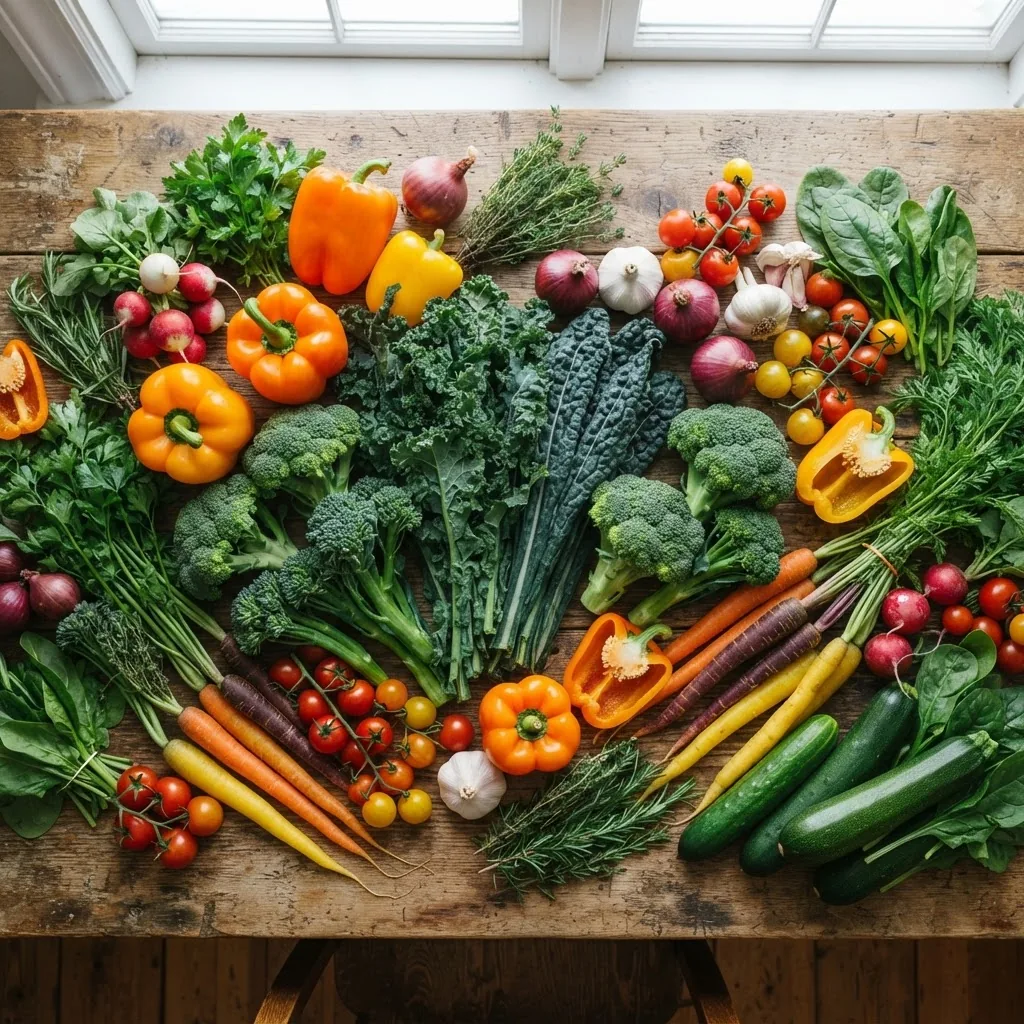
The list below connects vegetables and their vitamin strengths, with brief notes on absorption and practical use.
- Leafy greens (kale, spinach, collard greens) — High in vitamin K, folate (B9), and provitamin A carotenoids; support bone health, blood clotting, and fetal development. For a detailed entry on nutrient-dense vegetables see most nutrient dense vegetables guide and health benefits.
- Broccoli and crucifers (cauliflower, Brussels sprouts) — Provide vitamin C, folate, vitamin K, and glucosinolates (cancer-protective phytochemicals). For specifics on broccoli, visit broccoli nutrition facts.
- Bell peppers (red, yellow, green) — Extremely high vitamin C in raw form; red peppers also supply carotenoids supporting eye health.
- Carrots and sweet potatoes — Rich in beta-carotene (vitamin A precursor); support vision and epithelial integrity. See Calories in Carrots and Fiber Content Nutritional Guide for serving context.
- Tomatoes — Source of vitamin C and lycopene (an antioxidant linked to heart health); lycopene becomes more bioavailable with light cooking and fat.
- Legumes and starchy vegetables (peas, beans, corn) — Contribute B vitamins, fiber, and some vitamin K; classification nuances like whether a green bean is a fruit or vegetable can matter for recipes and nutrient context — see green beans fruit or vegetable differences.
- Onions, garlic — Not vitamin powerhouses but provide phytochemicals with cardiovascular and immune benefits when combined with other vitamin-rich vegetables.
100 vegetables guide with nutritional info
Transition: Understanding the nutrient profiles is useful, but absorption matters — the next section compares bioavailability from whole foods versus supplements.
Understanding Vitamin Bioavailability: Whole Foods Versus Supplements?
Answer: Bioavailability — the portion of an ingested nutrient that reaches systemic circulation and is usable by the body — is generally higher and more reliably modulated in whole fruits and vegetables due to natural complexes, fiber, and cofactors; supplements can provide targeted doses but vary by chemical form and carrier.
Term: bioavailability — the fraction of a nutrient that is absorbed and available for biological activity after ingestion.
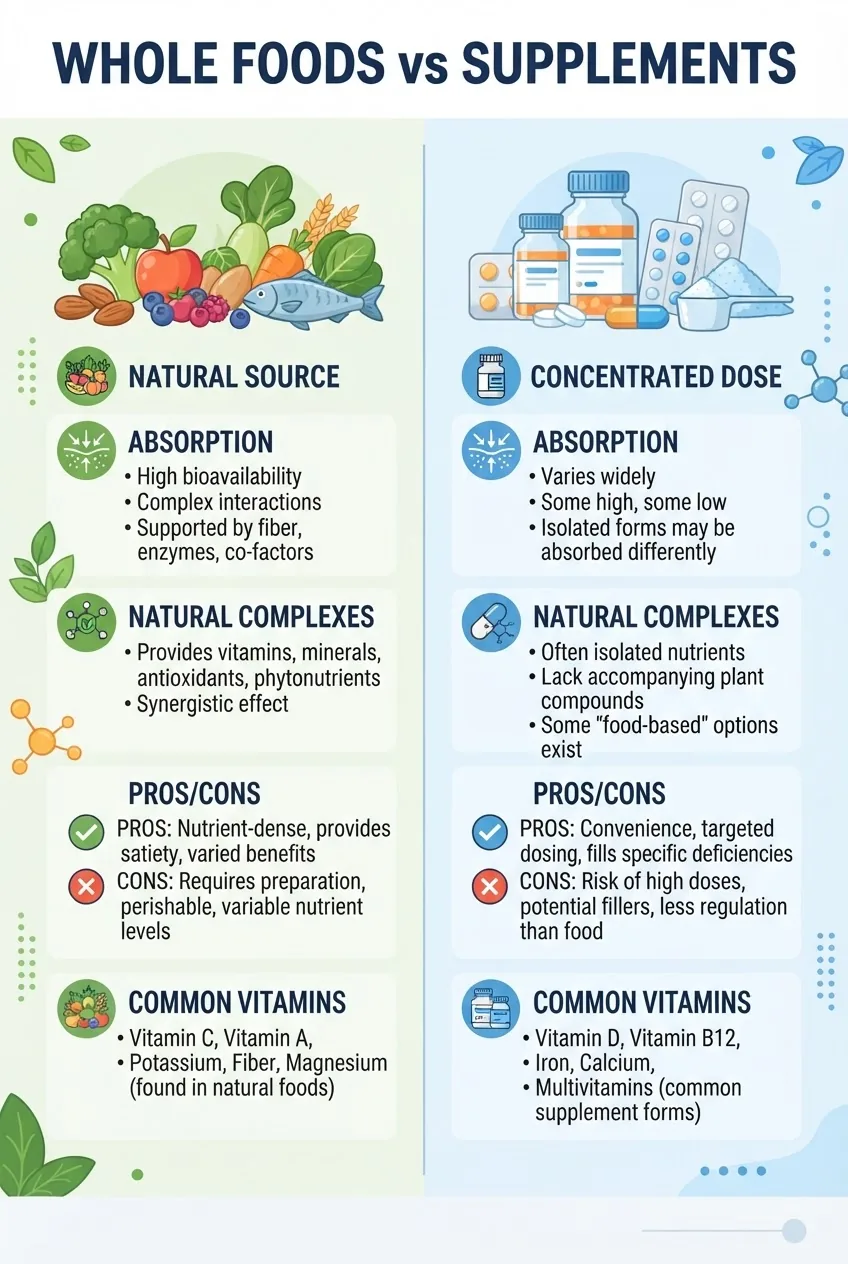
Key bioavailability facts supported by peer-reviewed findings and authoritative reviews:
- Whole foods provide nutrients with complementary compounds (fiber, polyphenols, healthy fats) that improve absorption and metabolic use; According to a peer-reviewed 2021 review, food matrices significantly alter micronutrient uptake compared with isolated supplements.
- Fat-soluble vitamins (A, D, E, K) require dietary fat for optimal absorption; consuming avocado or olive oil with carotenoid-rich vegetables increases conversion and uptake.
- Some synthetic supplement forms are more bioavailable for certain populations (e.g., methylfolate vs folic acid in people with MTHFR variants), but the matrix effect of whole food often confers additional benefits.
| Feature | Whole Foods | Supplements |
|---|---|---|
| Nutrient matrix | Natural cofactors (fiber, flavonoids) improve utilization | Isolated nutrient; bioavailability depends on chemical form |
| Dose control | Lower risk of overdose; gradual intake | Precise dosing possible; risk of excess |
| Consistency | Variable seasonally; food access dependent | Stable supply year-round if quality-assured |
| Best use-case | Health maintenance, chronic disease prevention | Clinical deficiency correction, targeted therapeutic doses |
Practical takeaway: prioritize whole fruits and vegetables for routine intake; consider supplements when documented deficiencies, restricted diets, or specific medical conditions limit food-based nutrient acquisition. For detailed absorption mechanisms see this peer-reviewed review (open access).
Transition: Given bioavailability realities, when should Texans consider fruit and vegetable vitamin supplements? The next section gives step-by-step guidance.
When and Why Consider Fruit and Vegetable Vitamin Supplements?
Answer: Consider fruit and vegetable vitamin supplements when a healthcare provider documents a deficiency, when dietary restrictions, food insecurity, or medical conditions impede intake or absorption, or when targeted higher-dose therapy is clinically indicated; otherwise, prioritize dietary sources first.
Term: RDA — recommended daily allowance; average daily nutrient intake level sufficient for nearly all healthy individuals, used to assess dietary adequacy.
Follow this practical stepwise framework to evaluate supplementation:
- Assess diet and risk factors. Track typical weekly fruit/vegetable intake for 2–4 weeks; note limited sun exposure (vitamin D), restrictive diets (vegan/low-fat affecting fat-soluble vitamin absorption), or conditions (IBD, bariatric surgery) that impair absorption.
- Check objective markers. Get blood tests when indicated: serum 25(OH)D for vitamin D, serum folate/B12 if anemia or neuropathy risk exists. According to 2023 NIH guidelines, lab confirmation should precede long-term high-dose supplementation.
- Choose supplement only when necessary. Use targeted single-vitamin supplements (e.g., vitamin D3, methylfolate) for documented deficiencies; consider a broad-spectrum multivitamin if dietary gaps are widespread.
- Match form to need. Prefer active forms for certain conditions (methylcobalamin for B12 deficiency in absorption disorders) and food-derived complexes if available for better tolerability.
- Monitor and adjust. Recheck biochemical markers after 8–12 weeks of therapeutic dosing; discontinue or taper to maintenance once corrected.
Example scenarios:
- Older adult with low food variety and limited sun exposure: test 25(OH)D, consider vitamin D3 supplement if deficient.
- Pregnant person with low dietary folate intake: follow prenatal folic acid/methylfolate guidance to reach recommended folate levels for neural tube prevention — According to 2023 NIH guidelines, 400–800 mcg folic acid is standard preconception and early pregnancy.
- Strict vegans with limited B12 sources: routinely supplement B12 (cyanocobalamin or methylcobalamin) per clinician advice.
Transition: Next, a focused overview of common fruit- and vegetable-derived supplements, their typical uses, and dosing considerations.
Common Vitamin Supplements Derived from Fruits and Vegetables: Overview and Usage?
Answer: Common supplements include vitamin C (often derived from ascorbic acid with citrus bioflavonoids), plant-based multivitamins, powdered green blends, and single-vitamin formulations (e.g., folate, vitamin K2); use depends on targeted deficiency, bioavailability, and quality assurance.
Common supplement categories and usage notes:
- Vitamin C supplements — typically as ascorbic acid or buffered forms; used for documented low intake or short-term therapeutic uses. Dosing commonly ranges 75–120 mg/day for maintenance; higher doses may be used short-term under guidance.
- Plant-based multivitamins — combine isolated vitamins with botanical extracts and powdered greens; useful when many small dietary gaps exist. Check label forms (e.g., methylfolate vs folic acid) and amounts relative to RDAs.
- Greens powders/whole-food concentrates — dehydrated blends of fruits/veggies that supply phytonutrients and small amounts of vitamins; not a full replacement for fresh produce but a useful adjunct in low-produce diets.
- Vitamin K supplements — K1 (phylloquinone) from leafy greens, K2 (menaquinone) produced by fermentation; K2 may have distinct bone and cardiovascular roles. People on anticoagulants should consult clinicians (see interactions section).
- Folate supplements — available as folic acid (synthetic) or methylfolate (bioactive). For those with genetic variants affecting folate metabolism, methylfolate may be preferred under medical advice.
- Food-derived extracts — e.g., acerola cherry vitamin C or citrus bioflavonoid complexes included to mimic whole-food co-factors; quality varies by manufacturer.
Label-reading walkthrough (practical experience signal):
- Check the Supplement Facts panel for nutrient amounts and %DV (percent Daily Value).
- Note the chemical form (e.g., vitamin D3 [cholecalciferol] vs D2 [ergocalciferol]; methylfolate vs folic acid).
- Look for third-party testing seals (USP, NSF, ConsumerLab) and clear dosing instructions.
- Avoid proprietary blends that do not disclose amounts per ingredient if you need precise dosing.
For regulatory context and safer choice frameworks, refer to the FDA guidance on dietary supplements: FDA Dietary Supplements and NIH Office of Dietary Supplements resources: NIH Office of Dietary Supplements.
Transition: While supplements can help when appropriate, they carry risks and best practices — covered in the next section.
Potential Risks and Best Practices for Using Fruit and Vegetable-Based Vitamin Supplements?
Answer: Risks include excess intake (toxicity, particularly with fat-soluble vitamins), interactions with medications, variable product quality, and false security replacing healthy diets; best practices involve clinician-guided use, checking interactions, choosing tested brands, and using supplements to complement—not replace—produce intake.
Term: bioactive form — the chemical form of a vitamin that is directly usable by the body (e.g., methylfolate vs folic acid).
Top safety tips (evidence- and practice-focused):
- Follow RDAs and tolerable upper intake levels (ULs); for example, vitamin A excess can cause toxicity—According to 2023 NIH guidelines, preformed vitamin A (retinol) has a UL of 3,000 mcg RAE for adults.
- Check drug–nutrient interactions: vitamin K can reduce the effect of warfarin; certain supplements alter statin or anticonvulsant metabolism. Consult your clinician or pharmacist for interactions.
- Prefer third-party tested brands (USP, NSF, ConsumerLab) to reduce contamination risk and verify content.
- Avoid megadoses without medical indication; short-term therapeutic dosing requires monitoring of biochemical markers.
- If you have kidney disease, heart conditions, or are pregnant, seek medical supervision before starting supplements.
are vegetables bad for you guide
Regulatory note: The FDA regulates supplements under a different framework than prescription drugs; manufacturers are responsible for safety and labeling, and the FDA acts post-market. For safety frameworks and reporting adverse events see FDA guidance (official resource).
Transition: Finally, practical ways to incorporate vitamin-rich produce into a Texas diet are next, with seasonal examples and meal ideas tailored to local availability.
Incorporating Vitamin-Rich Fruits and Vegetables into Your Texas Diet?
Answer: Eat a variety of colorful fruits and vegetables across seasons—winter citrus, spring strawberries, summer tomatoes and melons, fall greens—and pair fat-soluble vitamin sources with healthy fats to enhance absorption; local farmers’ markets and seasonal planning make this practical in Texas.
Real-world Texas seasonal examples and practical tips (experience signals):
- Winter (Dec–Mar): Texas citrus (oranges, grapefruit) supplies vitamin C; pair with yogurt (if tolerated) for iron absorption balance.
- Spring (Mar–May): Strawberries and leafy greens deliver vitamin C and folate—use in salads or breakfasts to start the day with nutrient density. For serving size guidance on berries, see how many blueberries in a cup.
- Summer (Jun–Aug): Tomatoes, peppers, melons, and mangoes provide carotenoids and vitamin C; grill vegetables lightly and add avocado to boost vitamin E absorption. For weight-management pairings, review our best fruits for weight loss.
- Fall (Sep–Nov): Squash, sweet potatoes, and dark greens are rich in vitamins A and K; roast with a drizzle of olive oil to aid fat-soluble vitamin uptake.
Practical meal and prep tips:
- Mix raw and lightly cooked vegetables: steaming and light sautéing can increase carotenoid bioavailability while preserving vitamin C when done briefly.
- Combine plant iron sources with vitamin C-rich fruits (e.g., spinach salad with orange segments) to maximize non-heme iron absorption.
- Batch-prep roasted vegetables with a source of healthy fat (olive oil or avocado) to ensure consistent intake of fat-soluble vitamins.
- Shop at Texas farmers’ markets seasonally and freeze surplus produce (berries, tomatoes) to maintain year-round nutrient access.
Transition: The evidence and practical tips above lead to actionable takeaways summarized below.
Bottom line: prioritize diverse whole fruits and vegetables, use supplements selectively and under guidance, and apply label-reading and third-party testing to choose safe, effective products.