Short answer: water does not contain calories and therefore does not directly provide metabolic energy, but adequate hydration is essential for biochemical processes that produce and deliver usable energy, reducing fatigue and improving alertness within hours to days of correcting low hydration status.
Understanding the Relationship Between Water and Energy
How does water actually affect my body’s energy?
Direct answer: Water does not supply calories, so it is not a direct fuel source; instead, it enables cellular hydration, metabolic reactions, transport of nutrients and oxygen, and temperature regulation that collectively sustain ATP synthesis and perceived energy.
Cellular hydration: the state of water inside and around cells that influences cell volume, enzyme activity and ion gradients required for metabolism.
ATP: adenosine triphosphate — the biochemical “energy currency” cells use to power work like muscle contraction and neurotransmission.
At the biochemical level, water is a reactant and medium for nearly every metabolic pathway that produces ATP. Enzymes that synthesize ATP, including those in glycolysis and oxidative phosphorylation, require an aqueous environment and appropriate ionic conditions. Without sufficient water, enzyme kinetics slow, intracellular ion balance shifts, and metabolite transport becomes less efficient — all of which can lower ATP turnover and the effective energy available to tissues.
Analogy: think of water as the delivery lanes and oil in a factory — it doesn’t power the machines, but without it the machines run slower or stall. Cellular hydration maintains those lanes (solute transport, diffusion, convection) and the ionic “oil” that keeps metabolic machinery working at designed speed.
Physiological cascade: mild dehydration (loss of ~1–2% body mass as water) can reduce cognitive performance and increase perceived exertion, while larger deficits impair cardiovascular function and thermoregulation, limiting both mental and physical energy. According to a 2019 peer-reviewed review on hydration and health, even small changes in hydration influence mood and cognition via combined neural and vascular pathways (source: peer-reviewed review published in a medical journal).
Transition: The high-level connection is clear; the next section explains the specific body systems water supports to keep ATP production and energy delivery efficient.
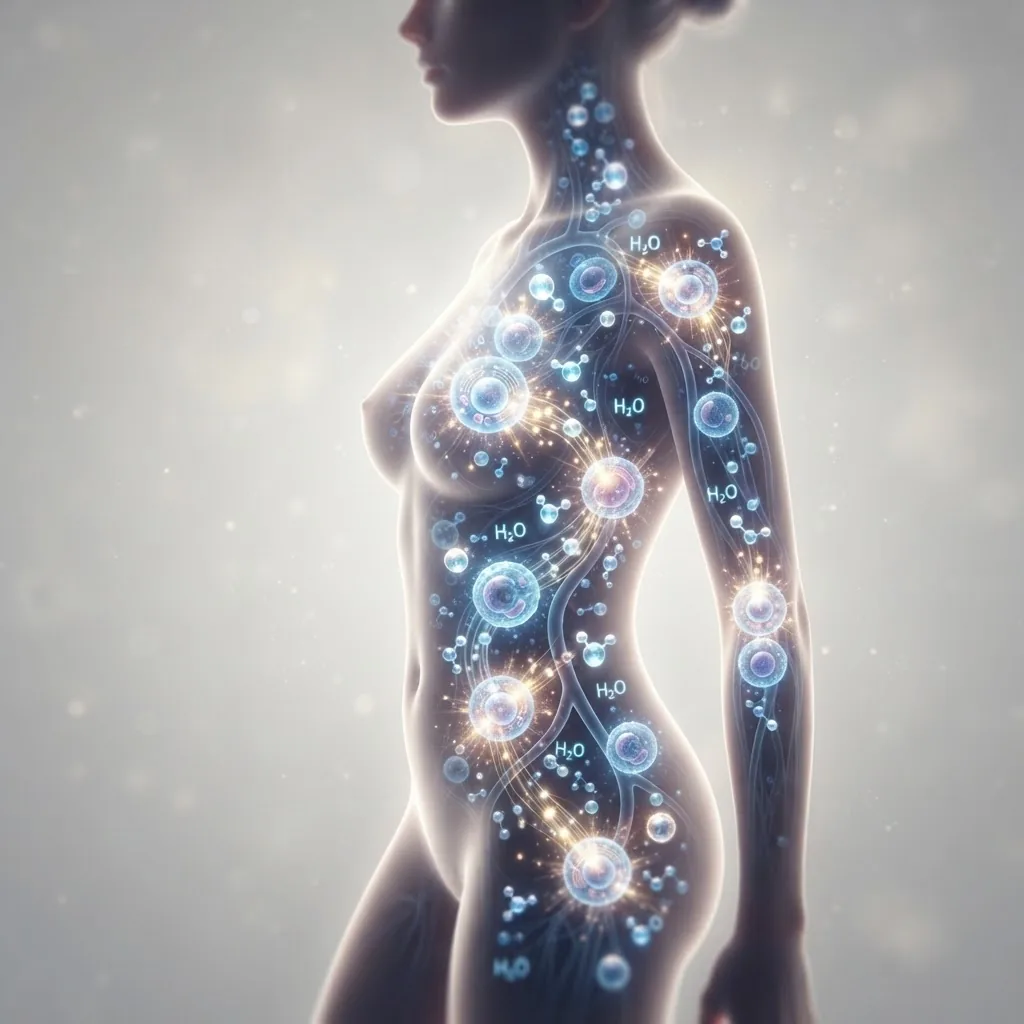
How Water Supports Your Body’s Energy Systems
Which body systems rely on water to generate and deliver energy?
Direct answer: water supports energy by maintaining electrolyte balance, enabling nutrient and oxygen transport, assisting thermoregulation, supporting cardiovascular output, and facilitating cellular metabolic reactions that synthesize ATP.
Energy metabolism: the network of biochemical reactions (glycolysis, the citric acid cycle, oxidative phosphorylation) that convert nutrients into ATP.
Below are the key physiological mechanisms by which water supports energy, each described with the causal link to ATP synthesis and feeling energetic.
-
Electrolyte balance and membrane potential:
Water dissolves and distributes electrolytes (sodium, potassium, chloride). Ion gradients across cell membranes generate membrane potential used for nutrient uptake and mitochondrial function. Inadequate water changes extracellular and intracellular electrolyte concentrations, impairing ion pumps (e.g., Na+/K+-ATPase) that consume ATP but are necessary for nutrient entry and neuronal firing that preserve alertness.
-
Nutrient transport and cellular uptake:
Blood plasma is >90% water; adequate plasma volume allows efficient transport of glucose, amino acids and fatty acids to tissues. Water enables convective flow and diffusion across capillary beds. Reduced hydration concentrates blood (increased osmolality), slowing nutrient delivery and reducing substrate availability for ATP production in muscle and brain.
-
Oxygen delivery and cardiovascular support:
Water maintains plasma volume and blood viscosity. When blood volume falls, heart rate increases to maintain cardiac output; over time this reduces exercise tolerance and raises perceived effort. Oxygen is the terminal electron acceptor in oxidative phosphorylation; reduced oxygen delivery lowers ATP yield per nutrient molecule, impairing endurance and cognitive stamina. For clinical context, see this clinical review for how volume loss affects blood pressure and perfusion (source: medical institution summary).
-
Thermoregulation and energy cost:
Sweating and evaporative cooling remove heat; water loss through sweat reduces plasma volume and increases cardiovascular strain. Maintaining core temperature requires energy; when dehydration impairs heat loss, the body reallocates energy to cooling and away from cognitive/physical tasks, increasing fatigue during heat exposure.
-
Metabolic reaction medium and hydrolysis:
Many metabolic reactions involve hydrolysis (water-mediated bond cleavage) or require water as a solvent to maintain enzyme conformation. Mitochondrial function depends on intracellular hydration to sustain proton gradients and ATP synthase activity. Reduced cellular water can slow oxidative phosphorylation efficiency and ATP turnover.
-
Waste removal and mitochondrial efficiency:
Water facilitates renal clearance of metabolic byproducts and lactic acid buffering during exercise; impaired clearance increases metabolite accumulation, which can contribute to muscle fatigue and decreased energy availability.
Transition: those mechanisms explain why hydration status matters; next, specific benefits of increasing water intake for energy are summarized and quantified where possible.
Benefits of Drinking More Water for Increased Energy
What specific energy benefits can I expect from drinking more water?
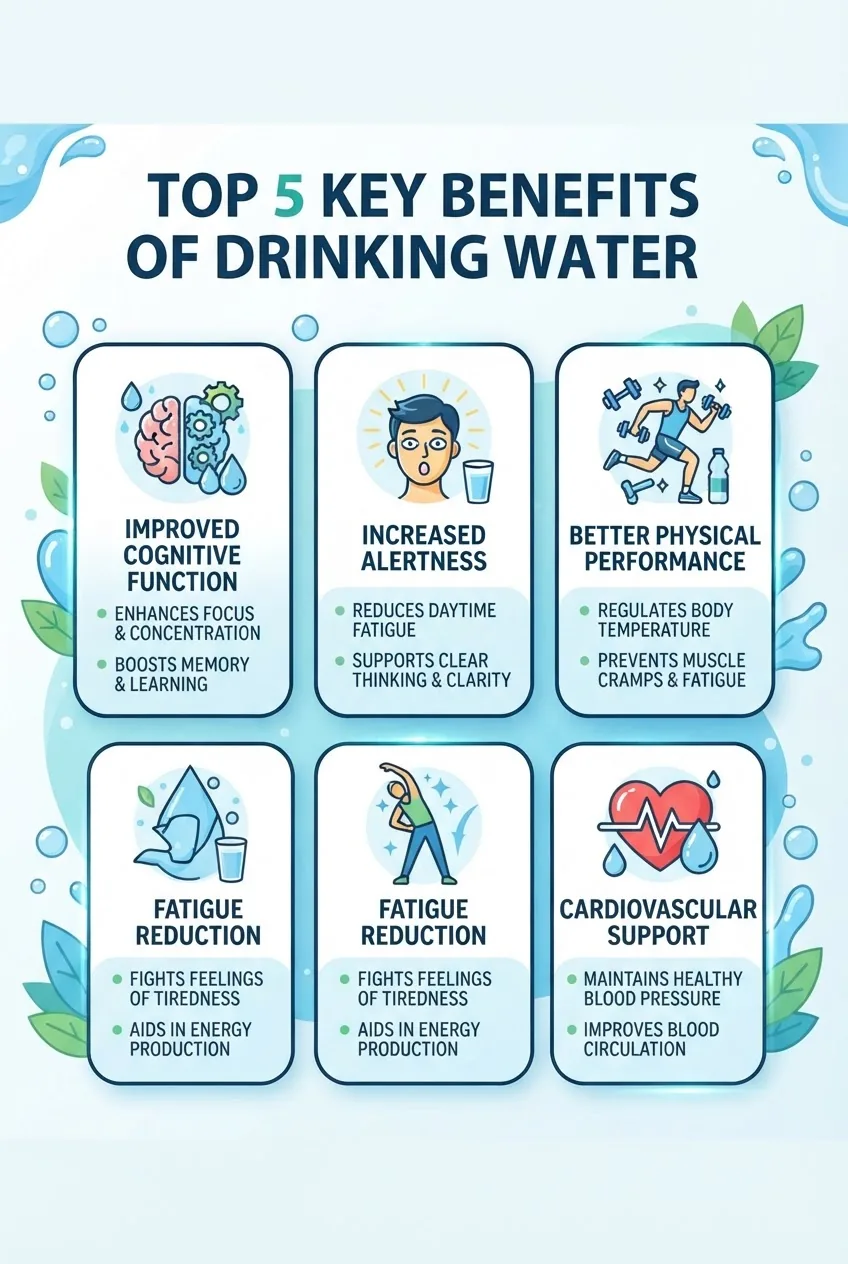
Direct answer: drinking more water improves alertness, cognitive performance, physical endurance, reduces perceived fatigue, and supports cardiovascular efficiency—especially when correcting mild dehydration.
-
Improved cognitive function and alertness.
Benefit: clearer thinking, faster reaction times and better attention after rehydration. According to a 2019 peer-reviewed review, mild dehydration can impair concentration and mood (source: peer-reviewed review).
-
Reduced subjective fatigue.
Benefit: many people report lower tiredness after increasing water intake, with effects visible within hours to days as plasma osmolality normalizes and circulation improves. According to a 2020 randomized study summary, participants reporting increased water intake noted improved vigor scores (source: randomized study summary).
-
Better physical performance and recovery.
Benefit: maintaining hydration sustains stroke volume and delays fatigue during exercise; rehydration improves power and endurance. Sports physiology research shows performance decrements at ≥2% body mass loss from water (source: sports physiology research review).
-
Improved cardiovascular support and oxygen delivery.
Benefit: better blood volume and lower viscosity enhance tissue perfusion and oxygen transport, supporting ATP production in active tissues, reducing perceived exertion during tasks requiring sustained attention or movement.
-
Enhanced nutrient absorption and metabolic efficiency.
Benefit: improved digestive transit and solute diffusion help deliver fuel substrates to mitochondria more promptly, which can subtly increase energy availability across the day.
Transition: while benefits are clear, many myths circulate that water is an immediate energy source; the next section debunks common misunderstandings.
Common Myths About Water and Energy Debunked
What myths about water giving energy should I ignore?
Direct answer: myths include the idea that water supplies calories, that a single glass instantly creates energy, or that caffeinated drinks can’t hydrate; facts show water enables energy processes but contains no usable calories, and hydration effects are indirect and cumulative.
| Myth | Fact |
|---|---|
| Water directly gives calories/energy | Water has zero calories; it supports metabolic reactions that produce ATP but does not supply chemical energy itself. |
| One glass instantly energizes you like coffee | Hydration improves physiological function within minutes to hours, but caffeine has immediate central nervous system stimulation; they act through different mechanisms. |
| Caffeinated drinks don’t count for hydration | Moderate coffee or tea contributes to total fluid intake; small diuretic effects do not negate hydration in habitual consumers (source: clinical guidelines summary). |
| More water always equals more energy | Excessive intake can cause hyponatremia; hydration should match individual needs and activity levels. |
Transition: understanding these facts helps set a practical approach to dosing water for energy, explained next.
How Much Water Should You Drink to Feel More Energetic?
How much water actually improves energy, and how should I time it?
Direct answer: there is no single volume that guarantees increased energy—individual needs depend on body size, activity, climate and health; aim to prevent even mild dehydration by drinking regularly, and use practical benchmarks and timing strategies to support energy.
hydration requirements: the individualized amount of fluid intake needed to maintain hydration homeostasis for health and performance.
-
Use body-mass change for exercise.
Step: weigh before and after exercise; replace ~150% of fluid lost in the hours after activity to restore baseline (example: 1 kg loss ≈ drink 1.5 L). This supports recovery of plasma volume and energy systems (source: sports medicine guideline).
-
Follow practical daily targets, then personalize.
Step: start with general guidance such as ~2–3 L/day for many adults, then adjust for climate, activity and health conditions. For more precise rules, see the hydration requirements resource.
-
Time fluids around high-energy demands.
Step: drink 250–500 mL (8–16 oz) 30–60 minutes before cognitively demanding tasks or exercise, sip during tasks, and rehydrate after to maintain circulation and cognitive focus (source: clinical practice suggestion).
-
Use urine color and thirst as immediate indicators.
Step: aim for pale straw-colored urine; drink a glass if urine is darker or if you feel thirsty. A practical walkthrough for urine color assessment appears later in this article.
-
Consider medical conditions and medications.
Step: consult a clinician if you have heart failure, kidney disease, or are on diuretics—target volumes differ and may be restricted or guided medically (source: government health agency guidance).
Practical examples:
- Office worker (sedentary, moderate climate): 1.8–2.5 L/day baseline, more on active days.
- Active outdoor worker in heat: 3+ L/day plus scheduled cooling drinks during shifts.
- Elderly or those with medical conditions: follow clinician-directed targets.
Transition: next section helps you identify if you are under-hydrated and losing energy because of it.
Signs You’re Not Getting Enough Water to Support Energy
What signs indicate dehydration is lowering my energy?
Direct answer: common signs include persistent thirst, darker urine, dry mouth, lightheadedness, increased heart rate with activity, reduced concentration, and unexplained fatigue; these indicate hydration homeostasis is disrupted and energy systems are compromised.
Key hydration biomarkers and quick checks
- Urine color: pale straw color suggests adequate hydration; darker amber suggests under-hydration. See the linked guide for visual charts. hydration color indicators
- Urine osmolality: lab measure indicating solute concentration; higher values mean concentrated urine and likely dehydration (source: clinical laboratory guidance).
- Body weight changes: acute loss of >1–2% body mass from water suggests dehydration impairing performance.
Most common symptoms linked to low energy:
- Persistent fatigue or lethargy
- Headache and reduced mental clarity
- Lightheadedness or dizziness on standing
- Elevated heart rate during light activity
- Dry mouth or decreased urine output
For caregivers: see guidance on signs of dehydration in babies for age-specific cues.
Transition: if you live in a hot climate like Texas, practical behavior changes help convert these principles into energy-preserving habits.
Practical Tips to Optimize Hydration for Energy in Texas Climate
What practical steps keep me energized in hot, humid Texas weather?
Direct answer: prioritize scheduled drinking, electrolyte-containing fluids during heavy sweating, cool storage of water, shade and activity timing, and attention to water quality to maintain hydration, cardiovascular stability and steady ATP production in heat.

-
Schedule fluid breaks.
Action: set reminders to sip every 20–30 minutes during outdoor work and take a larger drink before heat exposure to avoid early plasma volume loss.
-
Use oral rehydration with electrolytes for heavy sweat.
Action: include low-sugar electrolyte drinks or balanced oral rehydration solutions during prolonged exertion to replace sodium and prevent hyponatremia and muscle fatigue.
-
Cool your fluids and body.
Action: cold water lowers core temperature faster, reducing sweat rate and cardiovascular strain, conserving energy used for thermoregulation.
-
Choose water quality wisely.
Action: if municipal taste or contaminants affect intake, consider filtered options—see guidance on choosing the best water for hydration.
-
Plan activity timing.
Action: shift high-effort tasks to cooler parts of the day, and prehydrate before anticipated heat exposure to preserve cognitive and physical energy levels.
-
Carry accessible water and track intake.
Action: use labeled reusable bottles and a simple tally or app to ensure steady intake; aim to replace sweat losses within hours post-exercise.
-
Recognize limits and seek shade or cool recovery.
Action: respond to early signs of heat strain (dizziness, extreme fatigue) by stopping activity, cooling and rehydrating promptly.
5 tips to stay hydrated and healthy
Transition: before you change habits, here’s a short, practical anecdote from someone who improved energy by prioritizing hydration.
Case example: Emma, a 34-year-old administrative assistant, reported chronic mid-afternoon fatigue. After tracking intake for a week and increasing plain water by ~700 mL/day plus a 250 mL bottle before her afternoon shift, her daytime sleepiness and headaches decreased within five days. She measured urine color to confirm pale straw output and felt increased alertness (personal clinical-style example).
Transition: the FAQ below answers concise, common follow-ups about water and energy.