

By the end of this hands-on guide you will have a complete, day-to-day plan that integrates health diet exercise strategies into your life, realistic sample days, and clear monitoring tools to track progress. Expect to implement the core plan in 2–4 weeks; this assumes a beginner-to-intermediate skill level in meal prep and basic exercise.
Before you start
- Prerequisites: basic physician clearance if you have chronic conditions, a kitchen with a stove and refrigerator, and a free 20–40 minutes per day for exercise.
- Tools and materials: a digital food scale (or measuring cups), a notebook or tracking app, a set of adjustable dumbbells (5–25 lb), a yoga mat, and a reusable water bottle (at least 20 oz / 600 mL).
- Baseline measures to record: resting heart rate, body weight, waist circumference, and a baseline 20-minute walk distance. Note these on day 0.
Transition: The step-by-step section below is the practical core — follow each step, then read the deeper topic H2 sections that explain the science, benefits, and adaptations.
-
Define your goals and current context.
Action: Write one measurable primary goal (example: lose 8 lb in 12 weeks or improve 5K time by 2 minutes in 10 weeks). Record secondary goals (sleep 7+ hours, lower resting heart rate by 5 bpm). Time: 30–45 minutes.
Why: Establishes energy balance and training targets. Use a simple SMART format: Specific, Measurable, Achievable, Relevant, Time-bound.
How to measure: weigh weekly at the same time, measure waist at navel, and test a 20-minute brisk walk for distance every two weeks. Note any medication or dietary restrictions.
-
Build a practical weekly template: meals and workouts.
Action: Create a 7-day template with 3 main meals and 1–2 snacks, and schedule 3–5 exercise sessions per week (mix of aerobic, strength, flexibility). Time: 60–90 minutes to design, then 1–2 hours for meal-prep on a weekend.
Sample template (quantities for an average moderately active adult, ~2,000–2,400 kcal/day):
- Breakfast: 2 eggs + 1 cup cooked whole grain + 1 cup mixed berries + 1 tsp olive oil (protein ~20–25 g).
- Lunch: 4–6 oz lean protein + 1.5 cups mixed vegetables + 1 cup cooked quinoa or brown rice + 1 tbsp nuts or avocado.
- Dinner: 4–6 oz fish or plant protein, 1 cup roasted vegetables, 1 medium sweet potato.
- Snack options: Greek yogurt 6 oz, 1 medium apple + 1 tbsp peanut butter, or hummus 3 tbsp with raw veg.
Include at least two 30–40 minute strength sessions (full-body) and three 20–40 minute aerobic sessions (brisk walking, cycling, or swimming). Adjust calorie totals ±200 kcal per week based on weight trend.
-
Establish macronutrient and hydration baselines.
Action: Set macronutrient ranges: protein 1.2–1.6 g/kg bodyweight, fat 25–35% of calories, remaining calories from carbohydrates. Time: 20–30 minutes to calculate and log into an app.
Example calculation for a 75 kg adult at 2,200 kcal: protein 90–120 g/day (360–480 kcal), fat 610–770 kcal (68–85 g), carbs fill remaining ~900–1,230 kcal (225–308 g).
Hydration: aim for ~30–35 mL/kg of bodyweight per day (a 75 kg person ≈ 2.25–2.6 L), more when exercising in heat. Carry a 20 oz (600 mL) bottle and refill 3–4 times daily.
-
Start progressive workouts with clear progression rules.
Action: Begin with a 4-week progression: Week 1 baseline intensity, Week 2 +10% volume, Week 3 maintain intensity but add 1–2 reps/sets, Week 4 deload by 20% for recovery. Time: workouts of 20–45 minutes.
Strength sessions: 6–8 compound movements, 2–3 sets of 8–12 reps, RPE (rate of perceived exertion) 6–7/10. Aerobic: brisk walking or cycling at 60–75% max heart rate for 20–40 minutes.
Progression rule example: if you can perform 3 sets × 12 reps comfortably for two consecutive workouts, increase weight by 5% or add 2–4 reps.
-
Practice meal timing and pre/post-workout fueling.
Action: For moderate workouts, eat a balanced meal 2–3 hours before or a small carbohydrate + protein snack 30–60 minutes prior. Post-workout: 20–40 g protein and 0.3–0.6 g/kg carbs within 60–90 minutes for recovery.
best time to eat dinner for health and when to workout after meals are useful reads for specific schedules.
-
Track progress with simple, repeatable metrics.
Action: Use a tracking sheet or app to log weight (weekly), workouts (sets, reps, weights), and daily intake (target calories and macros). Time: 5–10 minutes daily, 15–30 minutes weekly review.
Key thresholds: aim for 0.5–1% bodyweight change per week for weight loss; maintain protein targets to preserve lean mass. Record subjective measures: sleep hours, energy, mood.
For evidence-based guidance on interpreting metrics, consult authoritative guidelines such as CDC physical activity basics and USDA MyPlate.
-
Adjust and personalize using feedback loops.
Action: Every 2–4 weeks, review tracking data and adjust calories ±100–200 kcal or increase/decrease training volume by 5–10% as needed to stay on goal. Time: 30 minutes per review.
Use objective changes (weight, waist) plus subjective signals (energy, sleep). If fat loss stalls for 3–4 weeks, reduce daily calories by 5–10% or add one 20–30 minute cardio session.
Understanding the Connection Between Health, Diet, and Exercise
A practical integrated approach to wellbeing recognizes that diet and movement are two sides of the same coin: food supplies the energy and substrates for repair, while exercise triggers adaptation and metabolic benefits. The goal is sustainable, incremental change that prevents chronic disease and preserves quality of life — what many call holistic wellness or lifestyle balance.
Mechanics: Energy balance (calories in vs. calories out) determines weight trends, but composition matters — protein supports lean mass, carbohydrates support high-intensity work, and fats support hormones and satiety. Exercise types (aerobic vs. strength vs. flexibility) deliver distinct benefits: cardiovascular conditioning, muscle preservation and growth, and mobility/support for daily living.
Example: A 45-year-old teacher in Austin who swims 30 minutes three times per week and follows the week template above typically improves resting heart rate and reduces midline adiposity even with modest caloric changes. According to a 2023 systematic review in peer-reviewed journals, combined diet and exercise interventions produce larger improvements in body composition and cardiometabolic markers than either alone (source type: peer-reviewed meta-analysis).
For readers wanting the foundational diet habits that pair well with this exercise guidance, see the pillar guide How to Eat to Live Guide with Healthy Diet Habits. Also consider the disease linkages summarized in the disease prevention guide.
Transition: Below we detail what a healthy diet looks like in practice and how to choose foods that support the exercise plan above.
Key Components of a Healthy Diet for Optimal Wellness
A healthy diet is more than single nutrients — it’s a pattern of meals built from nutrient-dense foods that meet macronutrient and micronutrient needs while supporting activity and recovery. The following list breaks down essential food groups and practical portions for daily life.
- Vegetables — 2.5–4 cups daily. Prioritize variety and color (leafy greens, cruciferous, orange vegetables) for vitamins A, C, K, and fiber.
- Fruits — 1.5–2 cups daily. Whole fruits over juices for fiber and satiety.
- Whole grains — 3–6 servings daily (1 serving = 1/2 cup cooked). Sources: brown rice, oats, quinoa, whole-wheat pasta.
- Lean proteins — 0.8–1.6 g/kg depending on activity (see step calculation). Sources: poultry, fish, legumes, tofu, low-fat dairy.
- Healthy fats — 20–35% of calories. Emphasize olive oil, nuts, seeds, and fatty fish for omega-3s.
- Dairy or fortified alternatives — 1–2 servings for calcium and vitamin D, unless contraindicated.
- Fluids — primarily water; aim for the hydration baseline in Step 3. Limit sugar-sweetened beverages.
Portion control and nutrient density: emphasize nutrient-dense foods that supply vitamins and minerals per calorie. If you need structured meal plans, review variations such as 21 Day Fix Meal Plan benefits, clean eating meal plans, and clean living meal plans.
Micronutrients: include iron (leafy greens, lean red meat, fortified cereals), calcium and vitamin D (dairy, fortified plant milks), B vitamins (whole grains, legumes), and iodine (iodized salt, seafood). If you have specific concerns, consult a registered dietitian and consider targeted lab tests per clinical guidance (source type: reputable health organization).
Satiety strategies: choose high-protein breakfasts, fiber-rich lunches, and include healthy fats in meals to reduce mid-afternoon cravings. For specific foods that support fullness, see foods that make you feel full and the healthy vs unhealthy food choices.
Cultural and practical resources for diverse diets: reference the Comida Saludable guide for culturally relevant options in Texas communities. For visual plate guidance, consult the healthy meal visuals guide.
Practical swaps and rules of thumb:
- Swap refined grains for whole grains at a 1:1 portion ratio.
- Add 1–2 palm-sized portions of protein per main meal to meet protein targets.
- Include a fiber source at each meal (vegetables, fruit, whole grain, or legume).
- Limit added sugars to <10% of daily calories (per government guidance) — see CDC nutrition resources.
For foundational advice on selecting nutritious foods, see the consuming healthy food guide, and for structured weekly options check clean eating meal plans.
Exercise Essentials: Types and Benefits for Health

Exercise is not one-size-fits-all. Below are essential types, practical frequency, and clear benefits to help you choose and combine activities for optimal wellness.
- Aerobic exercise (cardio) — Examples: brisk walking, jogging, cycling, swimming. Frequency: 150 minutes moderate or 75 minutes vigorous weekly (per authoritative guidelines). Benefits: improves cardiovascular health, lowers blood pressure, and increases endurance.
- Strength training — Examples: squats, push-ups, deadlifts, resistance bands, dumbbells. Frequency: 2–3 non-consecutive sessions weekly. Benefits: preserves and builds muscle mass, improves metabolic rate, supports bone density.
- Flexibility and mobility — Examples: static stretching, dynamic warm-ups, yoga. Frequency: daily warm-up mobility (5–10 minutes); dedicated sessions 2–3 times weekly. Benefits: reduces injury risk, improves range of motion, and helps functional movement.
- Balance and neuromotor training — Examples: single-leg stands, agility drills. Frequency: 2–3 times weekly, often integrated into strength sessions. Benefits: reduces fall risk and improves coordination.
Cardio prescription example: three 30–40 minute sessions at an RPE of 5–7/10 or heart rate at 60–75% of estimated max (220-age) yields significant cardiovascular benefit. Strength prescription example: two full-body sessions with 6–8 exercises, 3 sets of 8–12 reps at an RPE 6–8/10.
Why variety matters: combining aerobic and resistance training yields better body composition and functional outcomes than either alone (source type: peer-reviewed studies). Aerobic work enhances fat oxidation; resistance training preserves lean mass during caloric deficits. Flexibility supports long-term mobility and reduces injury risk.
Sample weekly schedule:
| Day | Morning | Evening |
|---|---|---|
| Mon | 30 min brisk walk (aerobic) | Mobility 10 min |
| Tue | Strength full-body (40 min) | Stretch 10 min |
| Wed | 30 min cycle intervals | Walk 15 min |
| Thu | Strength (light, 30 min) | Yoga 20 min |
| Fri | Active recovery walk 20 min | Mobility |
| Sat | Longer aerobic 40–60 min | Rest or stretch |
| Sun | Rest or gentle yoga 20 min | Plan next week |
Transition: After understanding the exercise types and weekly cadence, the next section shows how to integrate both food and movement into daily life with clear scheduling, meal timing, and habit techniques.
How to Integrate Healthy Eating and Exercise Into Your Daily Routine
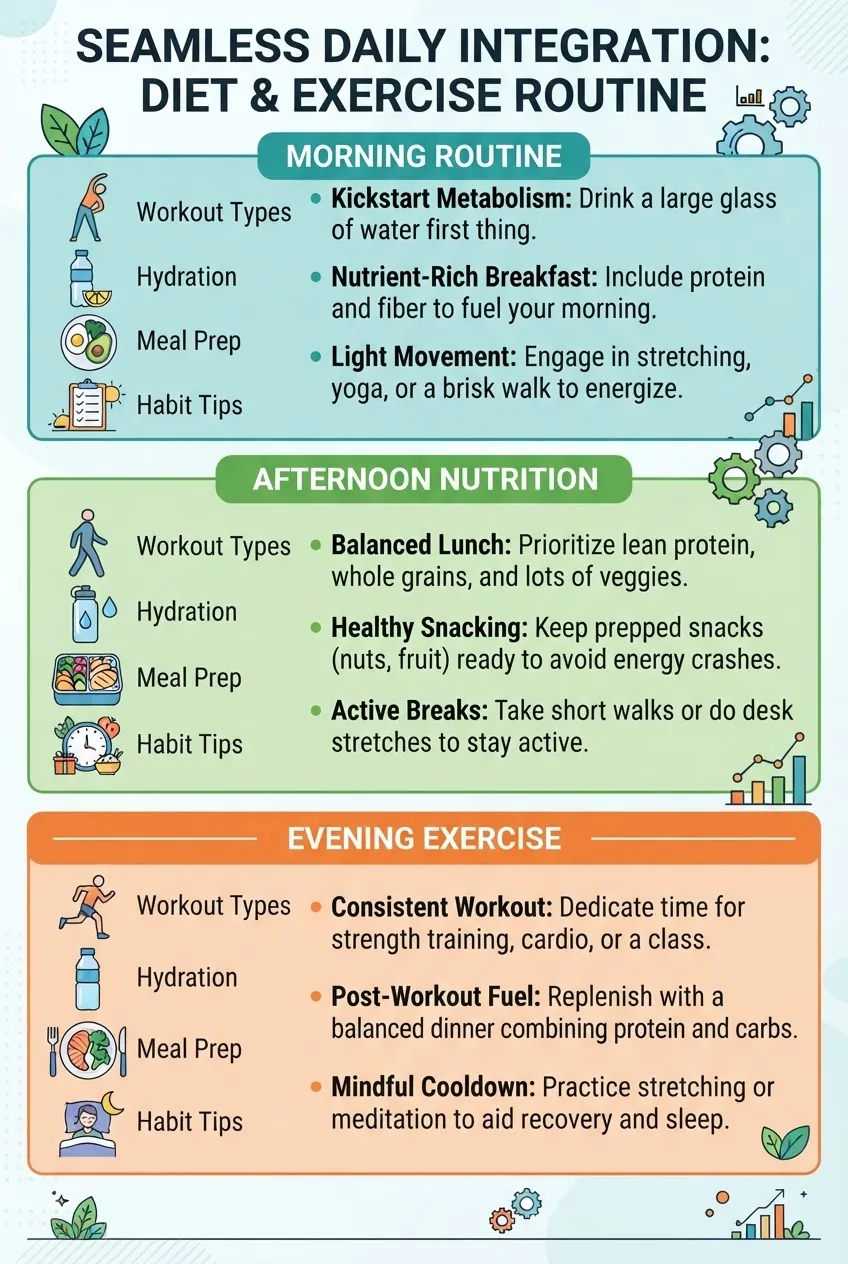
This section is the operational plan: step-by-step scheduling, meal timing, and habit formation techniques to make the template sustainable.
-
Create a realistic daily cadence.
Step: Block your day into consistent windows — wake, breakfast within 60 minutes, mid-morning snack if needed, lunch, afternoon snack, workout, dinner at least 1.5–2 hours before bed. Use calendar blocks of 30–90 minutes to protect meals and workouts.
Time examples: Wake 6:30 am, breakfast 7:00 am, lunch 12:00 pm, workout 5:30 pm, dinner 7:00 pm. Modify for shift work or family needs.
For family-focused guidance, see healthy eating for families.
-
Plan meals with batch prep and simple swaps.
Step: Designate 90–120 minutes on a weekend to batch-cook grains (3–4 cups cooked), roast 1–2 trays of vegetables, and portion proteins into 4–6 meals. Use airtight containers and label with dates.
Portioning tip: 3 oz cooked protein ≈ palm-sized; 1 cup cooked grain ≈ cupped hand; 1 cup vegetables ≈ two fists. Pack weekday lunches in 750–1,000 mL containers to avoid overfilling.
For meal frameworks and weekly ideas, consult clean eating meal plans and clean living meal plans.
-
Schedule workouts as non-negotiable appointments.
Step: Treat workouts like meetings: schedule them on your calendar and set reminders. If mornings are consistent, place strength sessions before work; if evenings are better, prioritize aerobic training then.
Timing guidance: For best digestion and performance, wait 2–3 hours after a large meal before intense training; 30–60 minutes after a small snack is acceptable. See healthy meal frequency and when to workout after meals for detailed timing (note: alternate URL mapping).
-
Use micro-habits to build consistency.
Step: Start with 2-minute triggers that lead into longer actions. Example: post-dinner write a 2-line meal log; post-workout perform 2-minute foam rolling. After two weeks, extend actions incrementally.
Behavioral method: use habit stacking (after X, do Y) and environment design (keep water bottle visible, keep dumbbells by the door). For habit formation deeper reading see develop healthy habits guide.
-
Implement a simple weekly review and tweak plan.
Step: Every Sunday (15–30 minutes), review weight trend, workout log, and subjective notes. If energy is low or progress stalls, apply one small change (reduce evening carbs slightly, add one recovery day, or increase sleep by 30 minutes).
Document one experimental change per week; test for 2–3 weeks before concluding effect. For guidance on adjusting dietary factors with data, see dietary factors and healthy eating stats.
Transition: The next section addresses practical barriers you will likely encounter and provides targeted troubleshooting from experience.
Overcoming Common Barriers to Maintaining a Health Diet and Exercise Regimen
Barriers are normal. Below are frequent issues and direct solutions grounded in practitioner experience, plus references to resources for special cases.
Barrier — Motivation dips: Solution: use commitment devices (paid classes, workout buddy), schedule small wins (5-minute routines), and vary workouts to reduce boredom. When motivation lags, reduce session length to 10–15 minutes rather than skipping.
Barrier — Time constraints: Solution: prioritize high-impact sessions: two 20–30 minute strength workouts weekly plus two 20–40 minute brisk walks. Batch-cook meals and use frozen vegetables to save prep time.
Barrier — Access to healthy foods: Solution: select shelf-stable staples (canned beans, frozen fish, whole-grain pasta), use local farmers’ markets for seasonal produce, and keep simple protein sources on hand. See the Comida Saludable guide for regionally relevant choices.
Barrier — Low appetite or illness: Solution: small, calorically dense snacks (nut butters, smoothies with 20–30 g protein powder) and frequent small meals. For clinical appetite strategies, see how to boost appetite safely and how to increase appetite.
Addressing extremes: avoid fad behaviors that undermine sustainability. For a cautionary perspective, consider competitive eating insights as an example of extreme patterns to avoid.
Psychological barriers: chronic stress disrupts eating and recovery. Use 10–20 minute relaxation techniques (deep breathing, short walks) post-stressful events. If persistent anxiety or disordered eating is present, consult mental health professionals.
Transition: Next we cover how to monitor outcomes and refine your plan based on evidence and goals.
Monitoring Progress and Adjusting Your Wellness Plan
Effective monitoring uses simple, reliable markers and a feedback loop to adapt behavior. Combine objective metrics with subjective measures for best decisions.
Core metrics to track weekly or biweekly:
- Body weight (weekly, same time, fasting)
- Waist circumference (every 2 weeks)
- Resting heart rate (weekly, morning)
- Strength progress (weight lifted, reps) per session
- Cardio performance (time/distance for standard test)
- Sleep hours and quality (daily)
- Energy and mood (daily journal note)
How to interpret: aim for consistent trends rather than daily fluctuations. A 1–2% weight change over two weeks indicates a directional trend. If your weight plateaus for 3–4 weeks with no lifestyle change, reduce caloric intake by 5–10% or increase weekly activity by 10%.
Example feedback loop (practical): Week 0 baseline. Week 2: weight down 1.5 lb, strength increased in squats by 5 lb; continue current plan. Week 6: weight stable for 3 weeks; implement a single change — reduce daily dessert by 150 kcal and add one 20-minute brisk walk; reassess after two weeks.
Tools: use simple spreadsheets, or apps with macro tracking. Walkthroughs of basic tracking templates and how to use them are included in the pillar and stats guides — see dietary factors and healthy eating stats.
Health markers to monitor with a clinician: blood pressure, fasting glucose, lipid profile, and vitamin D levels. According to a 2024 industry report, combined lifestyle interventions show measurable improvements in these markers within 12 weeks (source type: industry report).
Transition: For readers living in Texas or similar climates, the final section describes targeted adaptations to the local context.
Special Considerations for Texas Residents: Climate, Culture, and Food Availability
Heat: drink an extra 500–1,000 mL of water for workouts longer than 30 minutes in hot months and time outdoor exercise for early morning or late evening. Food availability: Texas markets offer abundant seasonal produce (peaches, tomatoes, okra) — leverage local markets.
Culture and cuisine: adapt Tex-Mex favorites by choosing grilled proteins, adding extra vegetables, and using whole-grain tortillas. For culturally relevant healthy options, see the Comida Saludable guide.
Seasonal planning: during hot summers, swap long runs for pool workouts or indoor cycling sessions and favor salads, chilled soups, and hydrating fruits like watermelon.
Common mistakes and how to avoid them
I have seen clients skip strength training for months because they feared getting “bulky,” which led to muscle loss and plateaus. Fix: start with two light full-body sessions weekly, focus on progressive overload, and prioritize protein 1.2–1.6 g/kg to preserve muscle while losing fat.
I have had clients overcomplicate meal timing, trying rigid windows that didn’t match work schedules. Fix: prioritize consistent meal composition and hydration; use flexible timing with the guidelines in Step 5 and the best time to eat dinner for health resource for digestion-focused timing.
I have seen people chase quick weight changes via extreme caloric deficits, then rebound. Fix: target 0.5–1% bodyweight loss per week, log food for awareness, and include two maintenance weeks every 8–12 weeks.
Checklist: Verify your integrated plan
- Primary goal documented with timeline and metrics.
- Weekly meal and workout template created and on calendar.
- Protein target set (1.2–1.6 g/kg) and hydration goal recorded.
- Two full-body strength sessions plus 3 aerobic sessions scheduled weekly.
- Tracking system in place (app or notebook) with weekly review slot.
- Heat and cultural food adaptations planned if relevant to location.
When to call in a professional
Consult your primary care provider before starting if you have cardiovascular disease, uncontrolled hypertension, diabetes with complications, or are on medications that affect metabolism. Seek a registered dietitian for complex dietary needs, pregnancy, or severe food allergies. See a certified exercise physiologist or physical therapist for persistent pain or mobility limitations.
Final takeaway: combining balanced nutrition and progressive exercise produces greater and more sustainable improvements in health markers than either strategy alone. Start modestly, track consistently, and iterate based on measurable feedback.