

What you’ll achieve: By the end of this hands-on guide you’ll know the 10 core intuitive eating principles and have step-by-step practices to make mindful food choices daily in a Texas lifestyle. Plan time: read + implement core steps over 2–6 weeks; skill level: beginner to experienced eater wanting a non-diet approach.
Before you start
- Materials: a notebook or notes app, a clock or timer, and one-week food log (no calorie counting).
- Mindset: willingness to pause judgment, allow small mistakes, and replace “rules” with curiosity.
- Tools: comfortable place to eat without screens for 10–20 minutes, access to balanced foods locally (or a farmers market).
- Support: consider a registered dietitian or mental health professional if you have history of eating disorders.
-
Learn what intuitive eating is.
What is Intuitive Eating? Overview and Context
Intuitive eating is a non-diet approach and mindful food philosophy developed by Evelyn Tribole and Elyse Resch that helps people rebuild trust with their body’s hunger and fullness signals and reduce diet-driven cycles. It rejects dieting rules and focuses on practical, evidence-informed skills to make food choices that support both physical wellbeing and emotional resilience.
Use this section to situate intuitive eating as a complement to broader eating patterns: it does not replace nutritional knowledge but re-centers decision-making on internal cues instead of external rules. For a deeper foundation on broader eating practices, see healthy diet habits guide.
Transition: Now that you have a concise definition, the next step is to learn each of the 10 core principles and why they matter for mindful food choices.
-
Study each core principle and the why behind it.
The 10 Core Intuitive Eating Principles Explained
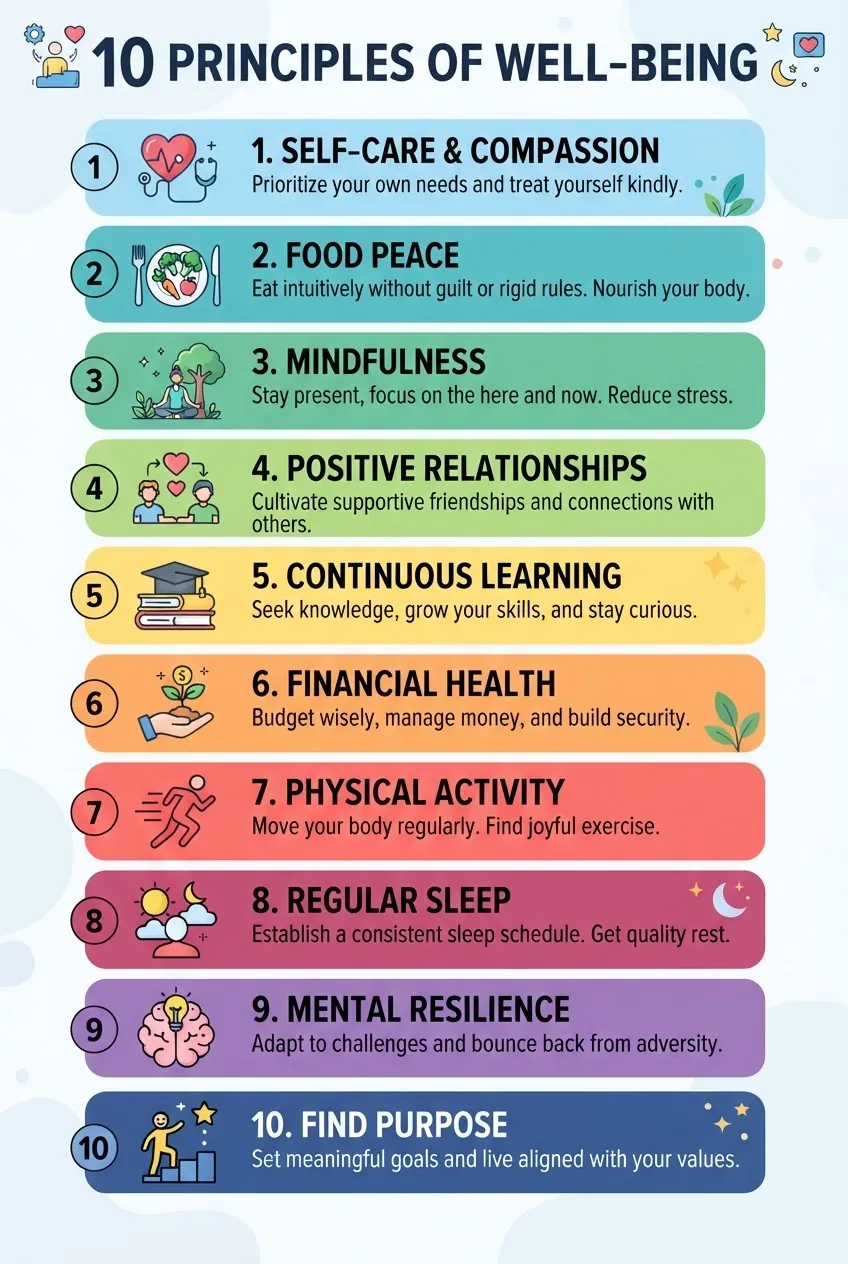
Below are the ten principles with practical interpretation and examples you can apply immediately. These principles are from the original framework by Evelyn Tribole and Elyse Resch and shaped by research showing psychological and behavioral benefits when applied consistently (founders: Tribole & Resch).
Principle 1 – Reject the Diet Mentality
Rejecting the diet mentality means naming diet culture’s promises and refusing quick-fix rules. Diet culture puts external rules and weight stigma ahead of internal cues, which often causes cycles of restriction and bingeing. Practically: remove diet books from visible spaces for 30 days and replace them with recipes you enjoy; practice saying, “I am choosing what feels nourishing now,” three times before a meal. Transition: honoring hunger is next.
Principle 2 – Honor Your Hunger
Honor your hunger by recognizing physical hunger signals (stomach rumble, low energy, difficulty concentrating) and responding before strong hunger prompts overeating. Keep a responsive schedule: eat within 3–5 hours of the previous meal if you’re physiologically hungry. If you struggle to notice hunger, follow these resources for boosting appetite safely and timing guidance: boosting appetite safely, healthy meal frequency, and increasing appetite effectively.
Principle 3 – Make Peace with Food
Making peace with food removes forbidden-food lists and food guilt. Practically, allow a previously “off-limits” food at a planned time: notice the experience, rate satisfaction 1–10, and identify if guilt appears. Repeated exposure reduces the “forbidden” reward and increases food freedom.
Principle 4 – Challenge the Food Police
“Food police” are internal voices enforcing rigid rules (“I ate carbs, I failed”). Challenge them by noticing judgments, using compassionate self-talk, and replacing “good/bad” labels with curiosity. When you hear the food police, ask: “What does my body actually need?” Pause for 60 seconds before reacting.
Principle 5 – Respect Your Fullness
Respect fullness by checking in mid-meal: set a timer for a mindful pause at 8–10 minutes into eating, breathe, and rate fullness on a 1–10 scale. Use portion-aware strategies like starting with smaller servings and going back for seconds with awareness. For help selecting satiating choices, review guides on foods that promote fullness.
Principle 6 – Discover the Satisfaction Factor
Satisfaction matters: a bowl of food that satisfies reduces the urge to keep eating. Focus on sensory experience—texture, aroma, temperature. Practical trick: before finishing a meal, note one thing you enjoyed; this trains attention to satisfaction and reduces mindless “chasing” for more food.
Principle 7 – Honor Your Feelings Without Using Food
Emotional eating often masks boredom, loneliness, or stress. Create a short list of 6 non-food coping tools (call a friend, 10-minute walk, 5-minute breathing, journaling prompt, a glass of water plus a 15-minute wait, or a playlist). When emotional urges arise, use the list and log outcomes to learn patterns.
Principle 8 – Respect Your Body
Respecting your body is about acceptance and practical care. Avoid weight-focused language; instead, list three body functions you appreciate. Practice body-respecting actions: comfortable clothing, nourishing movement, and sleep hygiene (aim for 7–9 hours nightly).
Principle 9 – Movement—Feel the Difference
Move for how it feels, not to burn calories. Start with 10–20 minute sessions, five times weekly, focused on enjoyment: a dance playlist, playing with kids, gardening, or a brisk curb-to-park walk. Learn safe timing for exercise relative to meals with resources on optimal wellness through movement and safe workout timing after eating.
Principle 10 – Honor Your Health with Gentle Nutrition
Gentle nutrition blends intuitive cues with practical food knowledge: prioritize whole fruits, vegetables, lean proteins, fiber-rich carbs, and water most days, while allowing pleasures. Use gradual changes—add one extra cup of vegetables per day for three weeks. For meal plans compatible with gentle nutrition see a clean eating meal plan, balanced nutrition tips, and clean eating basics. For lifestyle framing, review advice on maintaining a balanced lifestyle.
Transition: With the principles clear, the next major step is applying them to actual meal planning and decision making for mindful food choices.
-
Practice applying principles to daily choices.
How to Apply Intuitive Eating Principles for Mindful Food Choices
This section is a practical, step-by-step routine to shift from intention to habit. Follow the steps below across two weeks, repeat and adjust as needed.
- Start with a 72-hour inventory. For three days, log hunger/fullness ratings (1–10) before and after each eating occasion and note emotion triggers. Set phone reminders at typical meal times to prompt entries.
- Set a 10-minute mindful-eating practice. At one meal daily for two weeks, remove screens, take three deep breaths before eating, eat slowly, and pause at 8–10 minutes to rate fullness. This trains the “Respect Your Fullness” skill.
- Plan flexible meals, not rigid rules. Use a loose plate model: half vegetables, one-quarter protein, one-quarter starch or grain, plus a small portion of a pleasurable food. If you want a structured plan sometimes, compare structured options alongside intuitive choices (see 21 Day Fix meal plan benefits).
- Use “satisfaction checks.” Mid-meal, ask: “On a scale 1–10, how satisfying is this?” If low, consider adding a small, enjoyable element (herbs, a pinch of salt, texture) and re-rate after two minutes.
- Replace the food police scripts with specific statements. Pre-write three compassionate reframes for common triggers (e.g., “I’m allowed to enjoy tacos and still care for my health”). Place them where you plan meals or keep in your notes app.
- Create an emotional coping toolkit. Build a physical or digital list of 6 non-food strategies and schedule one daily 10–20 minute self-care activity (walk, call, hobby). Track cravings: if food appears within 10 minutes of a stressor, use the toolkit first and reassess.
- Use local foods and cultural favorites mindfully. Adapt Texas favorites: enjoy grilled fajitas with extra peppers and onions, slow down during a Sunday kolache, or pair brisket tacos with a side of charred corn salad. Mindful swaps preserve flavor and culture while adding balance—see regional tips below and resources like comida saludable.
- Teach family-friendly practices. Use family meals to model mindful eating: invite kids to rate one food they liked and one they’d try next time. For structured family guidance, review practical diet tips for families.
- Use visuals and portion cues. If helpful, use a single-plate visual or photos to plan meals—check balanced meal visuals.
- Reinforce learning with mini-experiments. Try one change per week (e.g., add one vegetable serving, swap sugary drink for water with citrus) and record energy, mood, and satisfaction. Compare outcomes after four weeks and refine.
Practical examples: If you live in a Texas college town and juggle classes and late labs, set a 10-minute pre-meal check-in and pack a protein-and-fiber snack (e.g., Greek yogurt and fruit) to prevent extreme hunger and impulsive fast-food choices—see healthy eating tips for students. If you want to pair meal timing with internal signals, read about best times to eat dinner.
Transition: Consistent practice produces measurable health and psychological benefits, discussed next with supporting evidence.
-
Review evidence and mental health outcomes.
Health Benefits and Psychological Impact of Intuitive Eating
Research links intuitive eating with improved mental health, reduced disordered-eating behaviors, and better body image. A 2016 systematic review (peer-reviewed study) summarized multiple trials showing associations between intuitive-eating scores and lower binge eating and higher self-esteem. According to a 2023 CDC report, diet cycling and weight stigma contribute to emotional stress; intuitive eating aims to reduce this burden by focusing on behavior change rather than weight alone (government health agency report).
Outcome Evidence summary Reduced binge eating Multiple cohort and intervention studies report lower binge episodes when intuitive eating skills are taught (peer-reviewed literature). Improved body image Short-term trials show increases in body appreciation scores after intuitive-eating interventions (academic journals). Sustainable eating patterns Compared with restrictive diets, intuitive-eating approaches have higher adherence and fewer cycles of regain (nutrition research). Public-health context: USDA dietary guidelines remain relevant for nutrient targets; intuitive eating complements them by applying internal motivation to meet those targets rather than enforcing external restriction (government dietary guidance).
For context, review official resources: CDC, USDA Dietary Guidelines, and the founders’ site Intuitive Eating.
Transition: Adopting intuitive eating can be powerful but comes with familiar barriers; next we outline common challenges and troubleshooting strategies.
-
Anticipate problems and prepare fixes.
Common Challenges and Troubleshooting Intuitive Eating
Common issues arise when habits or social settings push people back to diet-thinking. Below are practical, first-person tested strategies.
- Problem: Emotional eating outside mealtimes. Fix: I preloaded an emotional-coping list and used the 10-minute rule: wait 10 minutes while doing a non-food activity; often the urge passed.
- Problem: Social pressure to “eat less.” Fix: I prepared a brief script (“I eat based on hunger and what feels good”) and practiced it twice a week to reduce anxiety.
- Problem: Mistaking cravings for hunger. Fix: I started a “water + 5 minutes” rule: drink 250–300 ml water, wait five minutes, reassess hunger.
- Problem: Returning to calorie/fad thinking. Fix: I removed diet apps and replaced them with a one-page satisfaction log for meals.
- Problem: Health conditions requiring monitoring (e.g., diabetes). Fix: I coordinated intuitive practices with my clinician and used glucose data to shape cues—seek professional oversight when needed.
If you need structured help for weight-related medical issues, consider dietary change strategies for healthy weight.
Transition: The next section applies everything to the Texas cultural context with local examples.
-
Adapt the approach to your region and culture.
Intuitive Eating in Texas Cultural and Lifestyle Context

Texas food culture includes barbecue, Tex-Mex, kolaches, and abundant produce from farmer networks. Apply intuitive eating by honoring those tastes while adding mindful elements: plate a smaller portion of brisket with a large side salad of grilled greens and charred corn, or enjoy breakfast tacos with extra salsa and a side of fresh fruit to boost fiber.
Practical local strategies:
- Shop a Texas farmers market weekly—aim for +3 vegetable servings on market days.
- At BBQ: serve protein in 3–4 oz (about deck-of-cards size) portions if you want to savor meat while adding satisfaction-maintaining sides like pickled vegetables.
- At Tex-Mex restaurants, order a vegetable-forward side and pause after the first two tacos to check fullness; this supports mindful portioning in social meals.
For bilingual cultural guidance and recipes see comida saludable.
Transition: You’re ready to consolidate practices and check progress with the closing resources and steps.
-
Reflect, iterate, and sustain behavior change.
Summary and Encouragement for Sustainable Mindful Food Choices
Key takeaways: reject diet rules, tune to hunger and fullness, honor satisfaction, and combine gentle nutrition with self-compassion. These shifts take time—expect measurable improvement in mood and relationship to food within 4–12 weeks of consistent practice.
Practical closing steps: adopt one new habit every two weeks (10-minute mindful meal, emotional toolkit, one extra vegetable daily). For a broader lifestyle reframe, review guides on developing healthy habits.
Final encouragement: compassionate consistency beats perfection. If you want support, a registered dietitian familiar with non-diet approaches can personalize steps and ensure nutritional needs are met.
Common mistakes and how to avoid them
I once advised a client to “just follow hunger” without concrete tools—she misread boredom as hunger and felt discouraged. To avoid this, I now always start with a 72-hour inventory and teach the 10-minute pause and alternative coping list before asking clients to remove rules.
I also observed people equate intuitive eating with “eat anything anytime” and then regain old patterns; the correction was to introduce gentle nutrition goals (add one vegetable daily) and satisfaction checks. Small, measurable steps prevent overcorrection.
Checklist to verify your practice
- Have you completed a 72-hour hunger/fullness/emotion log? (Yes / No)
- Do you practice one mindful meal per day for two weeks? (Yes / No)
- Can you name three non-food coping tools you use within 10 minutes of an emotional urge? (Yes / No)
- Do you pause mid-meal at 8–10 minutes to rate fullness? (Yes / No)
- Have you tried one culturally relevant mindful swap (Texas example) this week? (Yes / No)
When to call a professional
Contact a registered dietitian or mental health professional if you have: a history of eating disorder behaviors (binging, purging, extreme restriction), medical conditions needing nutrient monitoring (type 1 diabetes), or persistent severe emotional eating that impairs daily functioning. Professional support ensures safety and tailored strategies.