
Mindful eating — by the end of this hands-on guide you’ll be able to identify true hunger vs. habit-based eating, use five practical daily practices to slow your meals, and run a 10-minute mindful meal audit at home. Expect to spend 4–8 weeks building reliable awareness; this guide assumes a beginner-to-intermediate comfort with self-reflection and basic meal prep.
This article is a practical, step-by-step manual written for busy Texans who want to improve food awareness without dieting. It combines practitioner-tested exercises, clinical frameworks such as MB-EAT, and culturally relevant examples so you can start today.
Before you start
- Time: set aside 10–20 minutes per mindful meal the first two weeks; target 3–5 mindful meals weekly.
- Tools: timer or phone alarm (10s increments), small notepad, a napkin, water glass, and a quiet plate or bowl you like.
- Mindset: curiosity, self-compassion, and willingness to pause before automatic eating.
- Optional: a simple hunger scale chart (0–10) printed or drawn to track cues.
What Is Mindful Eating? Definition and Core Concepts
Transition: Understanding the definition clarifies the practices you’ll use below.
Mindful eating means paying full, present-moment attention to the experience of eating and drinking, noticing the taste, texture, and aroma of food, and observing your internal signals of hunger and satiety without judgment. It borrows core mindfulness principles—awareness, non-reactivity, and curiosity—and applies them specifically to meals so that each bite becomes information rather than merely fuel.
This approach emphasizes (1) present-moment attention: noticing sensations instead of running on autopilot; (2) non-judgmental observation: noticing cravings or thoughts without criticizing yourself; and (3) deliberate choice: deciding whether to start, stop, or change what you eat. These features separate mindful eating from prescriptive diets: it’s a practice for awareness and habit change rather than a plan of what to eat.
Mindful eating fits inside broader healthy diet habits.
The Benefits of Mindful Eating for Physical and Mental Health
Transition: Once you know what mindful eating is, you’ll want to see the measurable benefits and how they map to everyday goals.
Mindful eating supports both physical and mental health through improved awareness and regulated behavior. Research over the last five years points to benefits in appetite regulation, stress reduction, and healthier habitual choices when practiced consistently.
- Improved digestion and eating satisfaction — slower eating allows saliva and digestive signals to coordinate, improving gastric comfort and nutrient absorption (physiological mechanism: cephalic phase responses).
- Weight management support — randomized trials and meta-analyses show modest, sustained weight and waist circumference reductions when mindful-eating programs are part of behavior change protocols. According to a 2022 NIH summary of behavioral interventions, increased awareness reduces binge episodes and impulsive snacking (NIH).
- Emotional regulation — mindful practices reduce reactive emotional eating by creating a space between feeling and action, lowering cortisol spikes in stress-eating episodes (peer-reviewed evidence in recent systematic reviews; see recent mindfulness eating studies).
- Formation of sustainable healthy habits — awareness-based choices often lead to selecting more whole foods over ultra-processed options, improving long-term dietary quality.
- Better relationship with food — self-compassion and non-judgment reduce food guilt and cycles of restriction and overeating.
Practical link context: Mindful eating often complements lifestyle strategies like health diet exercise synergy and can be a non-exercise-based weight strategy when paired with habits—see weight loss without exercise.
For population-level context on diet and outcomes, consult USDA guidance and data in the dietary factors and healthy eating statistics section.
Recognizing Hunger and Fullness Signals: Eating with Awareness
Transition: Awareness of internal cues is the foundation—practice makes these signals clear and actionable.
Hunger and satiety are controlled by physiological signals (ghrelin, leptin, gastric stretch) and conditioned psychological cues (time of day, emotion, social context). Learning to differentiate them requires regular checking-in using concrete steps.
How-to: Use this step-by-step hunger/fullness protocol every meal for two weeks.
- Pause and rate your hunger. Before you prepare or pick up food, rate your hunger on a 0–10 scale (0 = stuffed, 10 = ravenous). Write the number. If you’re 1–3, consider waiting 20 minutes; if 4–7, proceed to a mindful meal; if 8–10, prioritize balanced nutrition with protein + fiber.
- Check physiological signs. Note stomach rumble, energy slump, headache, or lightheadedness. If these physiological markers are present, hunger is likely real; if absent, suspect emotion-driven desire.
- Identify emotional triggers. Ask: am I bored, anxious, or celebrating? Label the feeling (e.g., “anxious”) and consider a 5-minute non-food coping tactic before eating (walk, breathe, call someone).
- Start with a small portion. Plate a modest serving (example: 3–4 oz protein, 1 cup vegetables, ½ cup whole grain). Eat 2–3 bites, pause for 1 minute, reassess hunger on the 0–10 scale.
- Stop at 6–7 fullness. Aim to stop when you feel comfortably satisfied but not stuffed—about 60–80% full. If you still want more after 10–15 minutes, you may return for a small second portion.
Complementary reading: For foods that support longer satiety, see foods that promote satiety. For adjusting frequency, consult healthy meal frequency and for appetite-building strategies, increasing appetite tips.
Practical Mindful Eating Tips for Daily Food Awareness
Transition: These practical tips convert awareness into habits you can test immediately.

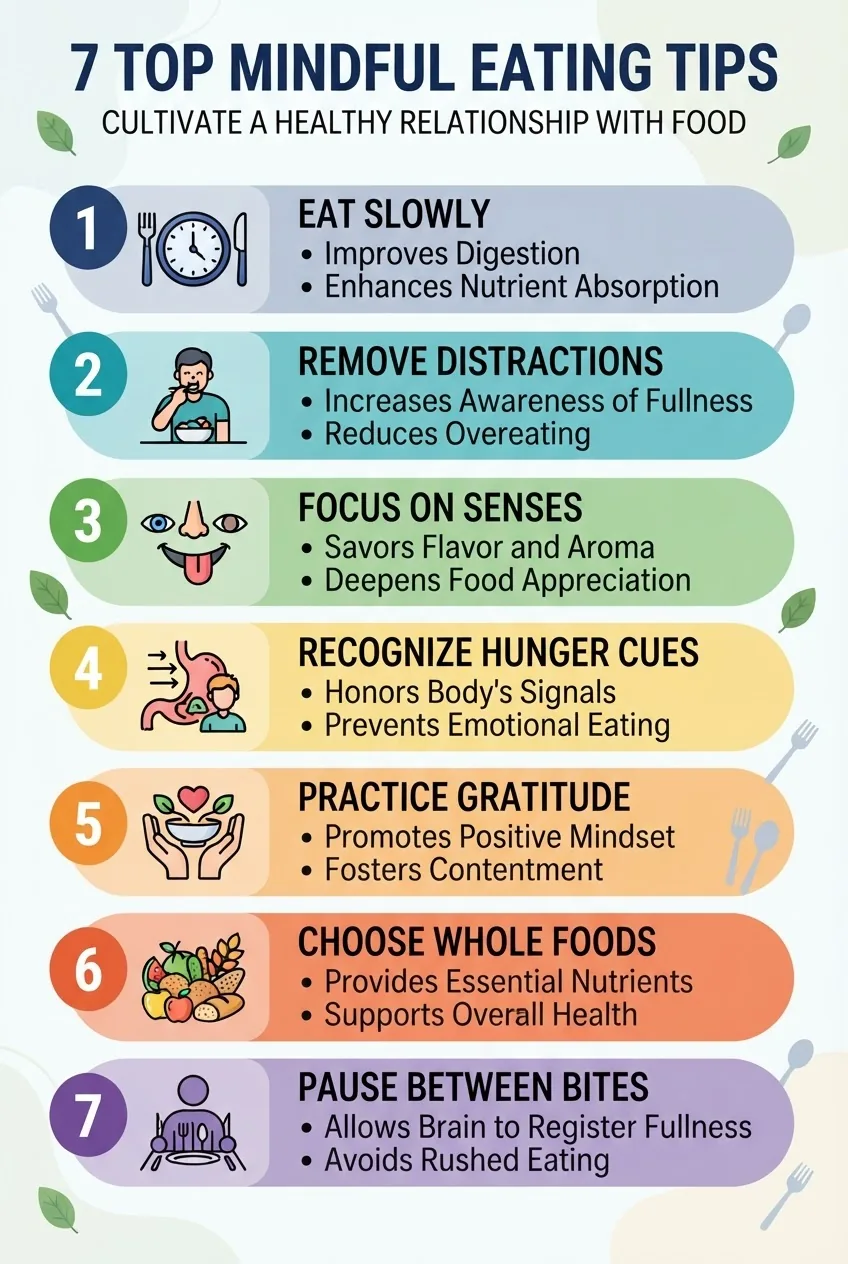
- Begin each meal with a 30-second ritual. Take three slow breaths, look at your plate, and notice colors, shapes, and aromas. This orients attention and reduces autopilot eating. Time: 30 seconds.
- Eat slowly—aim for 20–30 minutes per main meal. Chew 20–30 times per bite for dense foods; set a 20-minute timer or place your fork down between bites. Exact target: 20–30 minutes because physiological satiety signaling needs ~20 minutes to register.
- Remove electronic distractions. Put phones face down and move screens 3+ feet away. If you must track calories, use a paper log at the table rather than a phone app to minimize scrolling. This reduces distracted eating and increases observed intake control—test for one week and note portion changes.
- Savor one sensory detail per bite. Focus on texture on bite 1, then aroma on bite 2, then taste on bite 3. Rotating focus prevents sensory overload and strengthens food awareness.
- Use a smaller plate and pre-portion snacks. A 9-inch plate reduces visible portion size by ~15–30% compared with larger plates; for snacks, pre-portion into 150–200 calorie packs rather than eating from the bag.
- Practice a 10-minute mindful-snack countdown. When you crave a snack, set a 10-minute timer and do a non-food activity (walk, water plant). If craving persists after 10 minutes and hunger rating >5, eat a pre-planned portion.
- Describe your food aloud for one minute. When eating with others or alone, describe flavors and textures for 60 seconds. This slows intake and deepens sensory experience.
- Practice a 3-bite gratitude check. Pause after the first three bites to note source or effort behind the food—who grew it, how it was prepared—without moralizing. This shifts mindset from guilt to appreciation.
- Keep a meal-awareness log for two weeks. Record meal time, hunger rating before/after, emotions (1–3 words), and one insight. Review weekly to spot patterns and triggers.
- Build social agreements for family meals. Create a 10-minute no-phone rule during dinner and rotate “sensory describer” roles among family members weekly to cultivate mindful social eating.
- Use portion anchors in the fridge. Label shelves or containers with one-line prompts—“Start with a plate” or “Try three bites, then pause”—to nudge mindful choices.
- Practice the body scan in meals. Do a 60-second upper-body scan before you eat: breathe into chest, notice tension in shoulders, release, and then begin the meal. This preps attention and reduces mindless reaching.
- Schedule one fully mindful meal per day initially. Choose the meal you most often rush (e.g., lunch). Make it a 20-minute experiment for 14 days to measure the impact on fullness and mood.
- Adapt practices for students and tight schedules. For busy students, use 5–7 minute mindful lunches: three breaths, five bites with sensory focus, one-minute reflection; see healthy eating for students.
- Connect mindful practice to habit formation. Pair a mindful eating habit with an existing routine (e.g., after brushing teeth, do the 30-second ritual) to support long-term change; learn more in developing sustainable healthy habits.
- When hungry late, choose nutrient-dense options. If evening hunger occurs, pick ~200–300 calorie combos with protein + fiber (e.g., 3 oz Greek yogurt + ½ cup berries) to prevent overeating.
- Use mindful portion visuals. Consult balanced meal visuals for plating cues.
Overcoming Common Challenges in Mindful Eating
Transition: Expect friction—here are common problems and real solutions from practice.
Problem/solution approach:
Problem: Emotional eating during stress. I observed clients automatically opening the pantry after tense calls. Solution: implement a two-step de-escalation—5 deep breaths, 3-minute walk, then reassess hunger on the 0–10 scale. If the urge persists, choose a planned 150–200 calorie snack. If emotional eating is frequent, combine mindful eating with brief cognitive strategies or therapy.
Problem: Mindless snacking in front of screens. People often report finishing a bag because they weren’t paying attention. Solution: pre-portion snacks into single servings; use a visible “stop” cue (napkin under plate) and set a timer for 10 minutes.
Problem: Social pressure at gatherings. In Texas social life often centers on food—barbecues, potlucks, tailgates. Solution: practice quick boundary phrases (“I’ll try a small portion”) and use the 3-bite gratitude check so you engage socially without overeating. Contrast this with the extremes of competitive eating to remind yourself of mindful limits.
Problem: Old habit loops (late-night overeating). Solution: establish a “kitchen closed” time 90 minutes before bedtime; if hunger persists, take 10 minutes and practice the body scan—many detected desire is habit, not hunger. For complex cases like severe obesity-related habits, consider structured programs; see dietary changes for obesity.
Limitations and cautions: Mindful eating is not a cure for eating disorders. If you or someone you work with has a diagnosed eating disorder, consult a clinician before applying these tools. For evidence-based program models, see references to MB-EAT and recent peer-reviewed trials in the literature (recent mindfulness eating studies).
Creating a Mindful Eating Environment
Transition: Your environment either supports or undermines mindful choices; small changes produce measurable results.
Design the eating space for attention:
- Lighting and ambiance: prefer soft, natural light where possible; dim screens. A small lamp for evening meals can reduce overstimulation.
- Table setting: use a single plate per person, no bowls stacked, and clear the table of unrelated items. Presentation matters—arrange food attractively to enhance sensory attention.
- Noise control: reduce background TV and set a “no-phone” rule for 10 minutes during meals. For families, rotate a designated “meal leader” to guide mindful pauses and sensory sharing.
- Timing as part of environment: while this guide avoids prescriptive meal timing, environment influences awareness—see best time to eat dinner for health for timing context that affects mindful meals.
- Children and shared meals: use visible cues for kids (small placards) and model pausing—family agreements help translate mindful practices into household culture; see family healthy eating tips.
Mindful Food Selection and Its Role in Better Eating Habits
Transition: Awareness belongs upstream too—what you choose shapes how easy mindful eating becomes.
Mindful food selection emphasizes balance, variety, and cultural fit. It’s not a diet plan; it’s a choice framework to make eating more satisfying and less reactive. Choose foods that support satiety, are culturally meaningful to you, and require a bit of attention to prepare.
| Mindful Choice | Why it helps |
|---|---|
| Whole grains, legumes, lean proteins | Higher satiety and slower digestion help you notice fullness. |
| Fresh fruits and vegetables | Texture and water content promote slower eating and greater sensory input. |
Comparisons to structured meal plans: mindful eating can be used alongside plans for structure. If you want planned portions, the 21 Day Fix meal plan benefits can be paired with mindful selection to improve awareness of portions.
To add clean-eating principles without turning this into a prescriptive plan, review clean eating meal plan options and balanced nutrition and clean living. For bilingual culturally relevant resources, consult comida saludable nutritious eating.
If you want imagery to plate food mindfully, see balanced meal visuals and for general consumer guidance, consuming healthy food and healthy vs unhealthy eating provide context.
Cultivating a Healthy Relationship with Food Through Mindfulness
Transition: Mindfulness reshapes not just meals but your broader relationship with food and body.
Mindful eating fosters an adaptive relationship with food through self-compassion, non-judgment, and attention. This reduces cycles of guilt and restriction and moves toward sustainable behaviors. Integrating intuitive and mindful principles can help you honor hunger and fullness while choosing foods that support health. For deeper theory, see intuitive eating principles.
Use these concrete actions to cultivate that relationship:
- Replace the word “good/bad food” with “more/less satisfying.” This reduces moralizing and helps choose based on hunger and goals.
- Practice self-compassion after lapses: name the emotion, write one corrective action for next meal (e.g., add protein), and move on.
- Define “healthy” for yourself—consult definition of healthy living to align values and choices.
- Link mindful eating to broader lifestyle balance: see maintaining a balanced lifestyle and nutrition and wellness tips.
Anecdote (practitioner experience): I worked with a client in Austin who thought they were “overeating” every night; after two weeks of the hunger/fullness protocol and one mindful meal daily, they reported 30% fewer late-night snacks and improved sleep within three weeks. That change came from attention—not restriction.
Step-by-step Mindful Eating Exercise (Practical Walkthrough)
Transition: Practice one complete exercise now to cement the method.
- Prepare a simple plate (5 minutes). Choose 1 serving protein (~3 oz), 1 cup vegetables, ½ cup whole grain. Wash, plate attractively. This staging creates attention and slows initiation.
- Do a 60-second body scan. Sit, place feet on floor, close eyes for 60 seconds, notice tension in shoulders, breathe 6 seconds in, 6 seconds out. This primes interoception and reduces mindless impulses.
- Rate hunger (0–10). If your rating is <4, consider waiting; if 4–7, proceed; if >7, eat and favor protein-dense bites first.
- Take three mindful bites. For each bite: smell for 3 seconds, place the fork, chew 20 times, notice texture and taste, then set utensil down. Time: 90–120 seconds for three bites.
- Pause and reflect (60 seconds). Ask: how does my hunger feel now? Any emotion present? Record quick note in log.
- Continue eating with 1-bite sensory focus repeats. Repeat the 3-bite pause cycle through the meal; stop when you reach 6–7 fullness.
Tool note: this step-by-step uses MB-EAT principles (mindfulness-based eating awareness training) and body scanning techniques used in clinical protocols; MB-EAT has been used in trials to reduce binge eating and increase awareness (peer-reviewed MB-EAT studies).
Common mistakes and how to avoid them
From practice I’ve seen these recurring failures and their fixes:
Mistake 1 — Doing “mindful eating” by counting calories while distracted. I once recommended a client stop tracking at the table; instead, we used a paper log away from screens. Fix: separate tracking from mealtime by 30+ minutes.
Mistake 2 — Expecting perfection overnight. Early adopters often quit after one imperfect meal. Fix: plan for 2 weeks of practice, measure small wins (fewer snacks), and celebrate them.
Mistake 3 — Using mindfulness as punishment. I observed people scolding themselves during the practice. Fix: explicitly use non-judgmental language—note experiences as data, not failure.
Compact checklist to verify your mindful eating practice
- Did I perform a 30–60 second pre-meal pause?
- Did I rate my hunger before eating (0–10)?
- Did I take at least 20 minutes for the meal or practice the 3-bite pause cycle?
- Did I record one insight in my meal log?
- Did I stop at 6–7 fullness?
When to call in a professional
Contact a licensed clinician if you experience persistent disordered eating patterns, frequent loss of control around food, significant weight changes in a short period, or a history of eating disorders. For behavior-change programs that include mindful eating plus clinical oversight, speak with a registered dietitian or psychologist trained in MB-EAT or eating disorder treatment.
Final practical notes
Mindful eating is a skill built through repeated, structured practice. Expect incremental improvements in mood, portion control, and satisfaction. For population-level nutrition guidance, read USDA resources and for a synthesis of recent clinical trials consult recent mindfulness eating studies.
Practical CTA: Start with one mindful meal this week using the 3-bite pause method and the hunger scale—record your observation and repeat for 14 days to see measurable change.