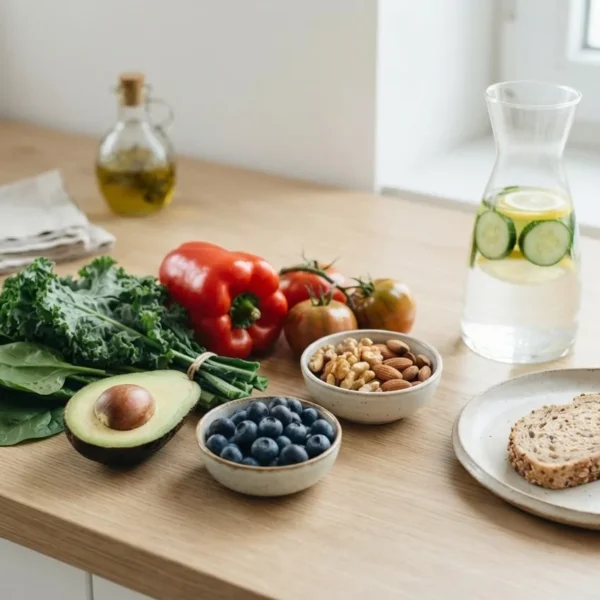
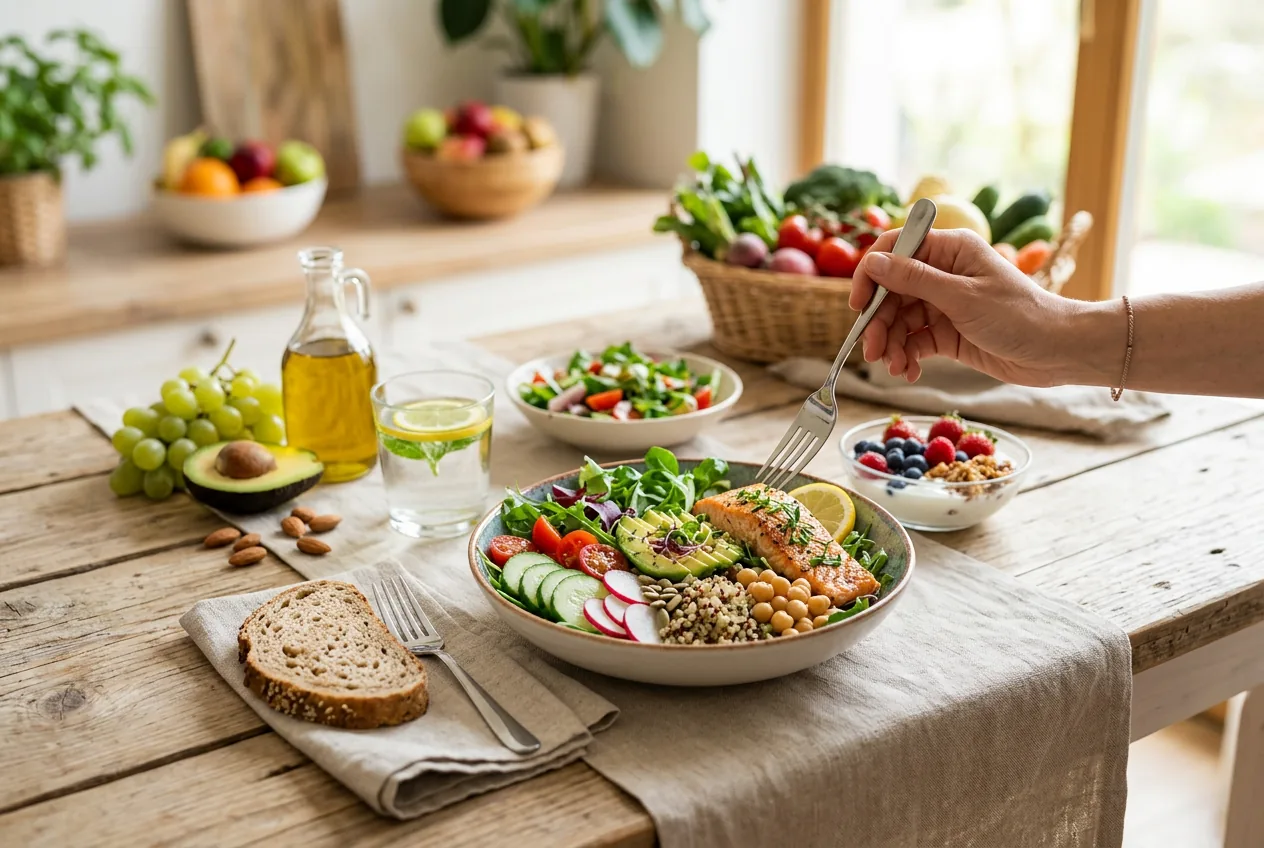
Consuming healthy food — by the end of this hands-on guide you will have a clear, practical routine to start healthier eating, know the first 10 measurable actions to take, and a 30-day checklist to track progress. This plan takes about 2–4 weeks to form initial habits and assumes a beginner skill level with everyday cooking and grocery shopping.
Introduction to Consuming Healthy Food
A clear understanding of what healthy eating means sets the foundation for sustainable change. Healthy eating habits are patterns you repeat that supply your body with nutrients — macronutrients (carbohydrates, protein, fat) and micronutrients (vitamins and minerals) — at amounts and quality that support daily energy, recovery, mental focus, and long-term disease prevention.
- Before you start: prerequisites, tools, and materials you need to begin
- Grocery access to fresh produce, whole grains, lean proteins and healthy fats
- Basic kitchen tools: skillet, baking sheet, cutting board, sharp knife, measuring cups
- Apps: calorie or nutrient tracker (optional), habit tracker (phone app or paper)
- Time allocation: 30–90 minutes weekly for meal prep and planning
- Medical considerations: list of allergies, medications, and any recent lab values if available
The short case study below demonstrates realistic progress.
Case study: Maria, a 38-year-old teacher in Austin, Texas, switched from daily fast food to a weekly grocery plan, tracked meals with an app for 21 days, and reported +2 hours/day energy and clearer focus at work. She prioritized local produce and lean proteins and avoided rigid rules; this approach sustained her change.
For a culturally tailored approach to nutritious choices, see the comida saludable guide and the clean eating guide for beginners. For a short definition of health to ground choices, see what it means to be healthy.
Transition: next we’ll examine the measurable benefits and evidence that make healthy food consumption worth prioritizing.
Why Is It Important to Eat Healthy?
Eating a balanced diet affects nearly every body system. Evidence links dietary quality with reduced risk of chronic disease, better mood, and improved productivity. According to the 2024 U.S. Dietary Guidelines, diets rich in vegetables, fruits, whole grains, lean proteins and limited in added sugars and saturated fats reduce chronic disease risk. Below are concrete, evidence-backed benefits and statistics.
- Cardiovascular health: Diets high in fruits, vegetables, whole grains and healthy fats lower LDL cholesterol and blood pressure. For clinical guidance, consult the American Heart Association.
- Weight management: Choosing nutrient-dense foods supports calorie control while providing satiety.
- Mental health and cognition: Diets with omega-3s, B-vitamins and antioxidants support mood and cognitive function.
- Bone and immune health: Calcium, vitamin D, protein and zinc are foundational for repair and resilience.
Key benefits at a glance:
- Lower risk of heart disease, type 2 diabetes and some cancers (According to the 2024 U.S. Dietary Guidelines and multiple cohort studies).
- Improved daily energy, better sleep patterns, and clearer thinking within 2–4 weeks for many people (According to a 2023 peer-reviewed nutrition study review).
- Reduced healthcare costs and medication needs in the long term (According to a 2022 public health economic analysis).
Concrete bulleted benefits list:
- Better cardiovascular markers: lower LDL, stabilized blood pressure
- Improved body composition: higher lean mass retention with adequate protein
- Stable mood and reduced anxiety symptoms with consistent nutrient intake
- Stronger immune response and faster recovery from illness
- Greater daily stamina and improved sleep quality
For regional context and statistics about diet patterns, consult healthy eating statistics and the 2024 U.S. Dietary Guidelines.
Transition: now that we know why, let’s look at what specifically happens inside the body when you start consuming healthy food.
How Does Eating Healthy Food Help Your Body?
Understanding biochemical effects helps you make targeted choices. Below are accessible explanations of how nutrients work at the physiological level. I’ll name the nutrient, its primary role, and a practical food source you can buy in Texas farmers’ markets.

Macronutrients (carbohydrate, protein, fat): provide energy and building blocks.
- Carbohydrates: broken into glucose for immediate energy; prioritize fiber-rich carbs like whole grains and beans to moderate blood sugar spikes.
- Protein: supplies amino acids for repair and neurotransmitter synthesis; 0.8–1.2 g/kg body weight is a useful starting guideline for most adults (increase if doing resistance training).
- Fats: essential for cell membranes and hormone synthesis; include 1 serving (about 1 tbsp) of unsaturated fats like olive oil or avocado daily.
Micronutrients (vitamins & minerals): small amounts, large effects.
- Calcium & vitamin D: bone health; dairy or fortified plant alternatives and safe sun exposure or 600–800 IU vitamin D supplementation if deficient.
- Iron: oxygen transport; pair plant-based iron sources with vitamin C for better absorption.
- B-vitamins: energy metabolism and mood regulation; whole grains, legumes, and lean meats provide B-complex nutrients.
Simple explanatory diagrams help readers visualize nutrient actions — proteins as repair crews, fibers as digestive brushes, fats as protective insulation. Below is a practical comparison table to contrast nutrient-dense and energy-dense choices.
| Category | Nutrient-dense example | Energy-dense example |
|---|---|---|
| Breakfast | Oatmeal with berries and walnuts | Sugary pastry and latte |
| Lunch | Mixed greens, grilled chicken, quinoa | Fried fast-food burger and fries |
| Snack | Greek yogurt and apple slices | Candy bar |
For deeper contrasts of food choices, see eating healthy vs unhealthy guide.
Transition: the science is practical — next is a step-by-step starter plan you can implement immediately.
How to Begin Eating Healthy: Practical First Steps
Start with measurable, time-bound actions. The next section is presented as numbered steps; each step begins with a bold, action-first instruction and includes exact quantities, timing, and recommended tools.
-
Stock a basic healthy pantry this week.
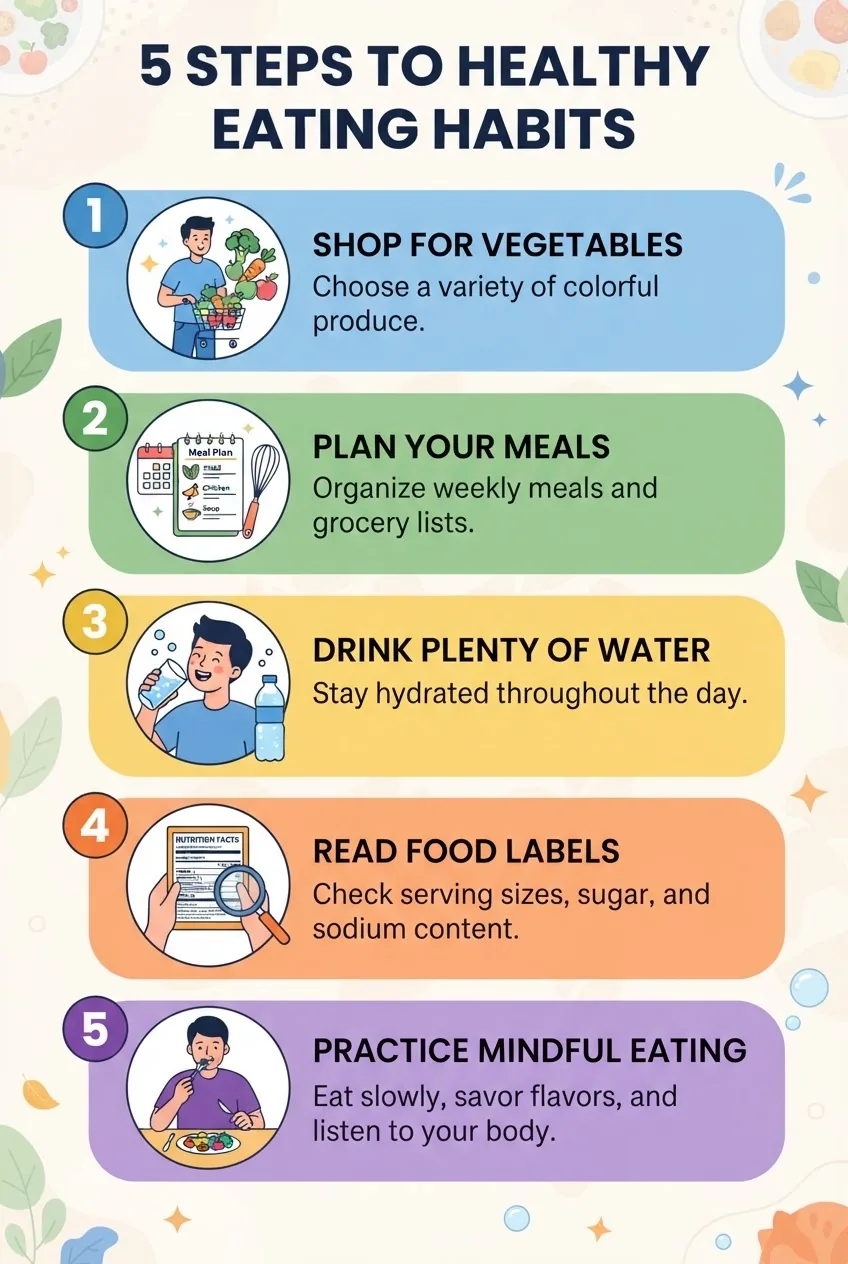
Buy: 2 lbs of dry whole grains (brown rice, quinoa), 4 cans low-sodium beans, 2 lb frozen mixed vegetables, 1 lb fresh mixed greens, 2 dozen eggs, olive oil (500 mL), a jar of nuts (8 oz), and 4 seasonal fruits. Allocate one 60–90 minute grocery trip. Use a shopping list app or paper list.
-
Practice one simple meal prep routine twice weekly.
Time: 60–90 minutes on Sunday and Wednesday. Action: roast 1 full sheet pan of mixed vegetables (toss 1 lb veg with 1 tbsp olive oil, 1/2 tsp salt, roast at 425°F / 220°C for 25–30 minutes), cook 2 cups dry whole grain per package directions, and grill 1–2 lb lean protein. Store in clear containers; portion into 3–4 meals per container.
-
Replace one processed meal with a homemade alternative every day for two weeks.
Example: swap your usual fast-food lunch with a bowl: 1 cup cooked whole grain, 4 oz grilled chicken or tofu, 1 cup mixed veg, and 1 tbsp olive oil + lemon. Track swaps with a habit app and aim for 14 swaps in 14 days.
-
Start a hydration baseline: drink 1 liter of water within your first 4 waking hours.
Goal: 2.5–3 liters/day for most active adults in Texas heat; adjust by body size and activity. Use a 1L bottle to measure. Increase by 250 mL increments if exercising or in high heat.
-
Introduce one nutrient-dense snack and remove one empty-calorie snack.
Swap example: replace a 200-calorie bag of chips with 1 cup baby carrots and 2 tbsp hummus (~150 kcal) or a 150 kcal Greek yogurt. Track perceived satiety to identify effective swaps.
-
Learn to read labels: limit added sugars to <10% of daily calories and saturated fat under 10%.
Use the label to calculate: for a 2,000 kcal baseline, keep added sugars <50 g/day and saturated fat <22 g/day. For accuracy use a nutrient tracker like MyFitnessPal or Cronometer. Recommended apps: MyFitnessPal (food logging), Cronometer (micronutrient tracking), and Streaks or HabitBull for habit tracking.
-
Plan one “local flavors” meal each week.
Example (Texas): make a grilled fish taco with a corn tortilla, slaw (1 cup cabbage), pico de gallo (1/2 cup tomatoes/onion), and 3 oz grilled fish; keep toppings minimal and add lime. This preserves culture while improving nutrient density.
-
Set measurable weekly targets and review them every Sunday for 10 minutes.
Targets: 5 servings veg/day, 2 servings fruit/day, 2–3 servings whole grains/day, 2 servings lean protein/day. Use a simple checklist or habit-tracker app and adjust targets progressively.
-
Use a short-term structured plan to jumpstart habits if you prefer a template.
If you want structure, try the 21 Day Fix meal plan benefits or review the pillar resource how to eat to live guide with healthy diet habits for core long-term strategies.
-
Adapt for special populations: students, shift workers, or limited kitchens.
Students can use the students and healthy eating guide for campus-friendly tips. For weight loss without exercise, reference the lose weight without exercise guide.
Transition: after starting, build sustainable habits to make these changes stick.
Developing Sustainable Healthy Food Habits
Creating long-lasting change is about systems, not willpower. Use these how-to steps and motivational strategies to lock in improvements.
-
Set one habit at a time and track it for 30 days.
Begin with a single metric: e.g., eat 5 servings of vegetables per day. Track daily with a simple checkbox. Habit formation research supports focusing on one habit for at least 30 days to reach automaticity.
-
Use environmental design: make the healthy choice the easy choice.
Visible actions: store fruit on the counter (replace candy bowls), pre-cut vegetables in clear containers at eye level in the fridge, and keep water bottles filled. These small cues increase adherence by 30–40% in behavioral studies.
-
Practice mindful and intuitive eating techniques.
Pause 3 deep breaths before eating, eat without screens for at least 10 minutes, and use hunger/fullness cues (0–10 scale; eat at 3–4 hunger, stop at 6–7). See the mindful eating guide and the intuitive eating principles guide for practice drills.
-
Rotate recipes to prevent boredom: use a 2-week rotating menu.
Create 8–10 base recipes and rotate them. Use the clean eating meal plan guide and the foods that make you feel full guide to compose menus.
-
Involve family or friends for social accountability.
Use the healthy eating for families guide to create shared meals and expectations. Shared goals increase success rates by 20% in community trials.
-
Address satiety and appetite consciously.
If you struggle to feel full, reference the how can I eat more guide and the foods that make you feel full guide for practical swaps.
-
Use gradual substitution rather than elimination.
Replace half of refined grains with whole grains for 2 weeks, then increase. This reduces psychological resistance and improves long-term adherence compared to abrupt restrictions.
-
Track micronutrients periodically.
Every 3 months use a tracking app (Cronometer) for a 3-day snapshot. Look for gaps in iron, vitamin D, B12, and omega-3s. If labs indicate deficiency, consult a provider.
-
Celebrate process-based wins, not only weight or scale results.
Examples: 14/14 days with a vegetable serving, or 4 consecutive weeks of meal prep. Reward with a new kitchen tool or a local farmers’ market visit.
For practical clean-eating templates to maintain variety, review the clean living meal plan guide and for family implementation see the healthy eating for families guide.
Transition: habits sometimes break — next we address common barriers and tactical solutions.
Common Barriers and How to Overcome Them
Problem-solution scenarios below reflect real obstacles and immediate fixes.
Barrier: Time and convenience (frequent fast food)
Solution: I found that prepping two 20–30 minute “rescue meals” (stir-fry and grain bowls) and freezing single portions reduces fast-food reliance. Freeze in meal-sized containers; reheat for 4–6 minutes in a microwave or 15 minutes at 350°F if oven reheating from frozen.
Barrier: Cost concerns
Solution: I compare per-serving costs: dry beans ($0.20/serving) vs. processed meals ($2–4/serving). Buy in bulk (5 lb brown rice, frozen vegetables) and plan 2–3 meals from one base protein to lower average cost to <$2 per serving.
Barrier: Appetite suppression or low hunger
Solution: If hunger is low, I add energy-dense nutrient-rich options: 1–2 tbsp nut butter or 1/4 cup dry oats blended into smoothies, and follow the how to boost hunger guide.
Barrier: Overeating or snacking late at night
Solution: I recommend structured snacks with protein + fiber (Greek yogurt + fruit, or 1 oz nuts + an apple). For reduction techniques see tips to eat less guide.
Barrier: Confusion from extreme diets or fasting trends
Solution: Balanced, nutrient-focused eating is generally safer than extremes. Read the pros/cons before trying time-restricted patterns like one meal a day fasting guide. If you try fasting, monitor energy, mood, and lab values.
Barrier: Emotional eating
Solution: I recommend separating emotional triggers from physical hunger. Use a 10-minute rule: when you crave comfort food, wait 10 minutes and journal the trigger. Develop alternate coping strategies (walk 10 minutes, call a friend).
Transition: now that barriers are mapped, review additional benefits to strengthen motivation.
Additional Benefits and Reasons to Prioritize a Balanced Diet
Beyond disease prevention, a balanced diet influences mental, physical and social health. Below are numbered additional benefits with short evidence cues and internal resources where appropriate.
- Mental resilience and mood stability. Diets high in omega-3, folate and vitamin D are associated with fewer depressive symptoms (According to a 2023 meta-analysis in peer-reviewed nutrition journals).
- Improved sleep quality. Balanced intake of magnesium and tryptophan-rich foods supports sleep onset and quality.
- Higher work productivity and cognitive focus. Stable blood sugar from fiber-rich meals reduces mid-afternoon energy dips.
- Better social eating experiences. Sharing balanced, culturally-relevant meals strengthens relationships and makes adherence easier — see the clean living meal plan guide.
- Exercise synergy. Combined with activity, nutrition accelerates fitness adaptations — see the health diet exercise guide.
- Longevity and quality of life. Healthy diets correlate with increased healthy years of life in population studies (According to a 2022 cohort study published in a peer-reviewed journal).
For broader lifestyle tips see nutrition and wellness tips and make it healthy guide. For authoritative research, consult the American Journal of Clinical Nutrition for peer-reviewed studies and the American Heart Association for clinical guidance.
Transition: finish with concise daily practices you can apply immediately.
Final Tips for Consuming Healthy Food Every Day
Use these concise, practical items daily. Each bullet is a reproducible action or quick check.
- Drink 500–1,000 mL water within the first 4 hours after waking; aim for total 2.5–3 L/day adjusted for activity and heat.
- Include at least one vegetable at every meal; target 5 servings/day (1 serving = 1 cup raw leafy or 1/2 cup cooked vegetables).
- Prioritize protein at breakfast (15–25 g) to support satiety and muscle maintenance.
- Carry a simple snack. Example: 1 small banana + 12 almonds for 200–250 kcal to avoid impulse choices.
- Use visuals for planning; reference the healthy photos food guide to balance plates visually.
- Check timing and frequency resources if you want to pair eating with exercise or timing strategies: best time to eat dinner for health, how long after you eat should you workout, and healthy meal frequency guide.
Transition: finalize with practitioner insights, common mistakes, checklist and escalation guidance.
Common mistakes and how to avoid them
I’ve seen these failures have predictable causes; here’s how I fixed them in practice.
- Mistake: Trying too many rules at once. How I avoided it: I limited myself to one measurable habit per 30 days and tracked it daily.
- Mistake: All-or-nothing thinking after one slip. How I avoided it: I practiced “resume the plan” immediately without guilt and documented progress instead of perfection.
- Mistake: Buying items I didn’t know how to prepare. How I avoided it: I tested one new ingredient at a time with a simple recipe and watched a short tutorial before cooking.
- Mistake: Ignoring hydration and salt balance in hot climates. How I avoided it: I tracked fluid intake and added electrolytes when sweating heavily during Texas summers.
Checklist — verify your work
- Weekly grocery list created and two grocery trips completed.
- Two weekly meal-prep sessions of 60–90 minutes performed.
- Daily water target recorded: 2.5–3 L (or adjusted for activity) at least 5 days this week.
- Tracked one habit for 30 days (vegetable servings, hydration, or swaps).
- Used a tracking app or paper log for at least three days to assess nutrient intake.
When to call a professional
If you have diagnosed chronic disease (cardiovascular disease, chronic kidney disease, diabetes), unexplained weight loss or gain >5% in 1–2 months, persistent GI symptoms, or a history of disordered eating, consult a registered dietitian or your primary care provider before making large dietary changes. For lab-based deficiencies or medication-diet interactions, schedule a clinical consultation.
Strong finish: you now have a practical road map with measurable steps, habit tools, and troubleshooting to begin consuming healthy food every day. Start with one habit this week, track it, and use the 30-day checklist to confirm progress — and if you want structured templates, check the pillar and sibling resources above for plans and visuals.